
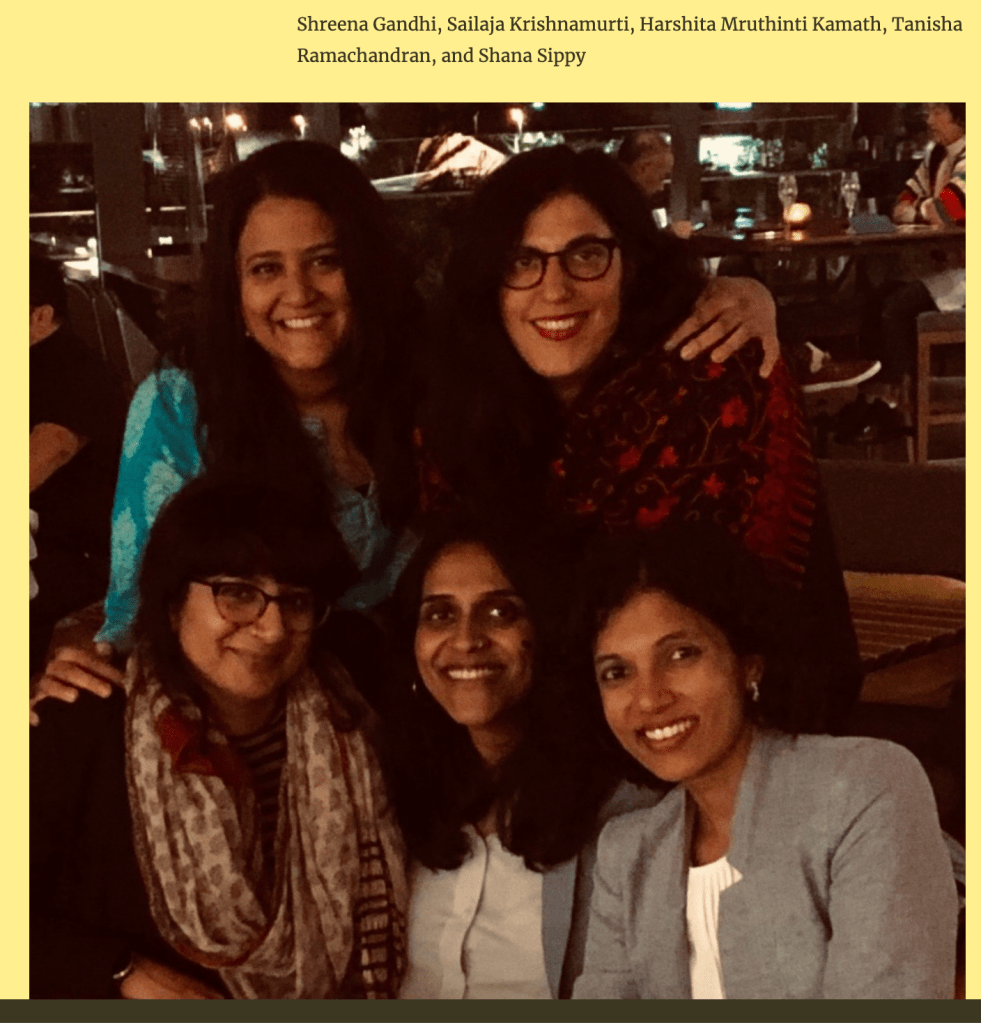
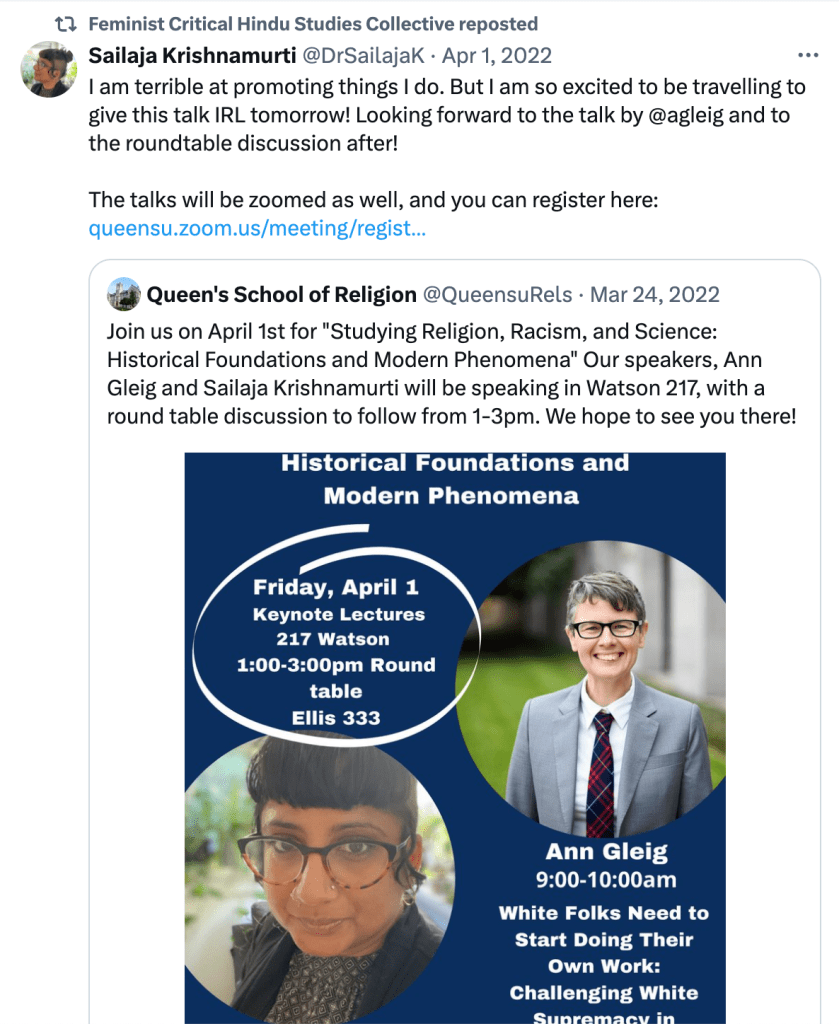
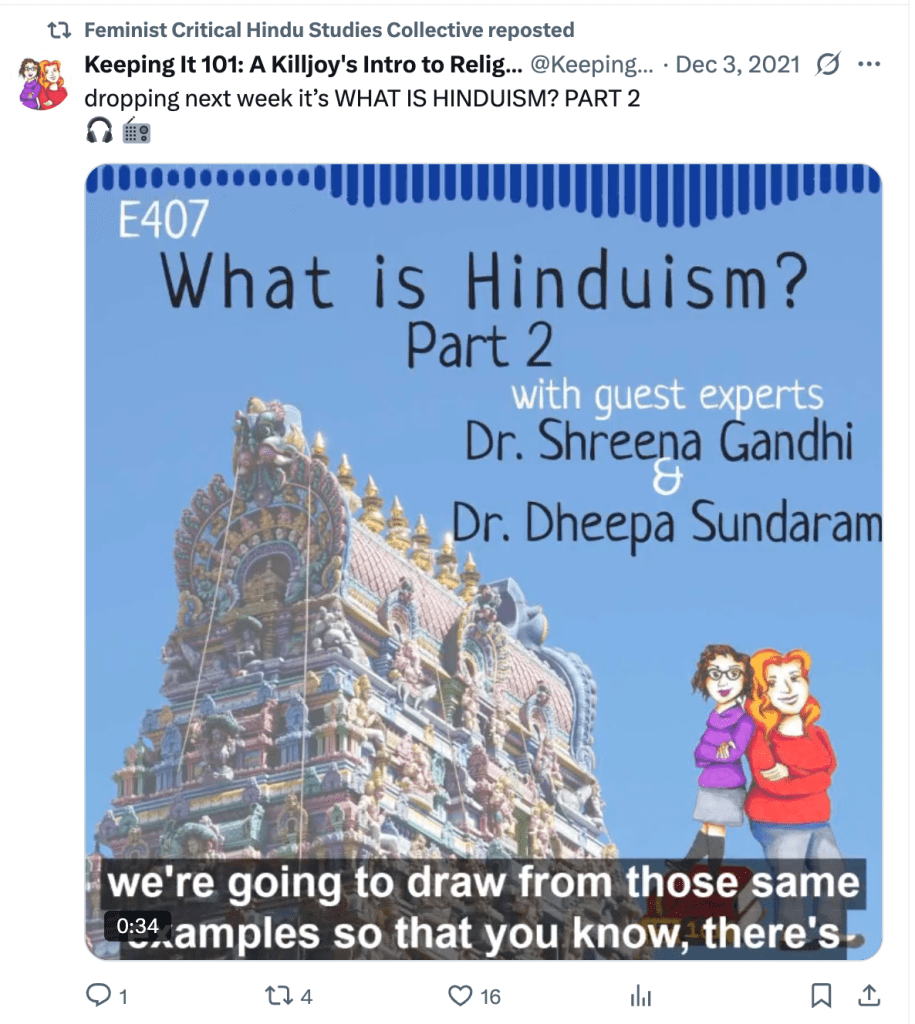
The Feminist Critical Hindu Studies Collective (FCHS) is an ultra-left leaning grouping of women professors of Indian-origin. They also go by the name, Auntylectuals as they call themsleves South Asian Aunties. Shreena Gandhi, Sailaja Krishnamurti, Harshita Mruthinti Kamath, Shana Sippy, and Dheepa Sundaram make up FCHS. Tanisha Ramachandran and Dheepa Sundaram were founding members but have left the group.
As per their website, the Collective received an initial grant of $5,000 and since then received $30,000 to develop Critical Hindu Studies Pedagogies. The most recent grant was in 2023 by the Wabash Center for Teaching and Learning in Theology and Religion to focus on Pursuing Justice: Critical Hindu Studies Pedagogies in Formation.
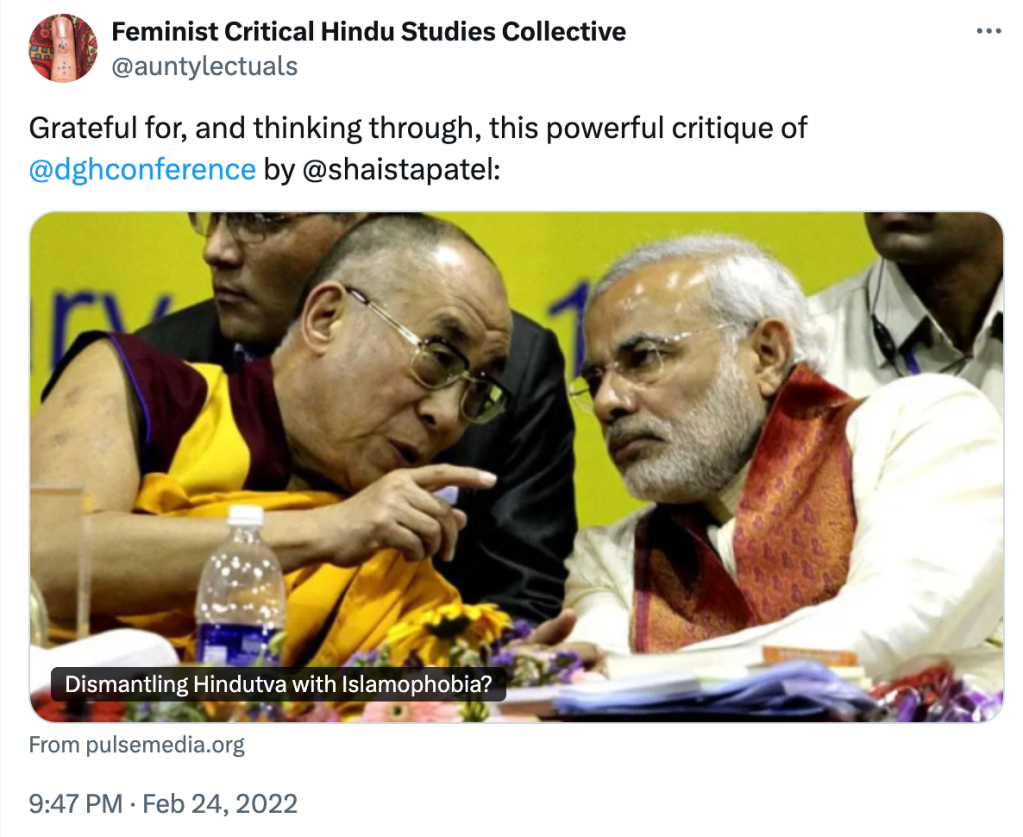
Some of their members were speakers at the Dismantling Global Hindutva Conference where they equated Hindutva with Hinduism despite the event organisers claiming the opposite.
In “Feminist Critical Hindu Studies in formation“, they outline the philosophy, methodology, and aim of the Collective. They seek to uncover the visible structures of “the regulation of sexuality and gender, and the violence of caste” on which Hinduism and Hindus studies rest. They write “We use the concept of Hindu formations to complicate the notions of “Hinduism” and “Hindus” as categories that not only arise in conjunction with forms of white supremacy and caste supremacy, but are imbricated with them.”
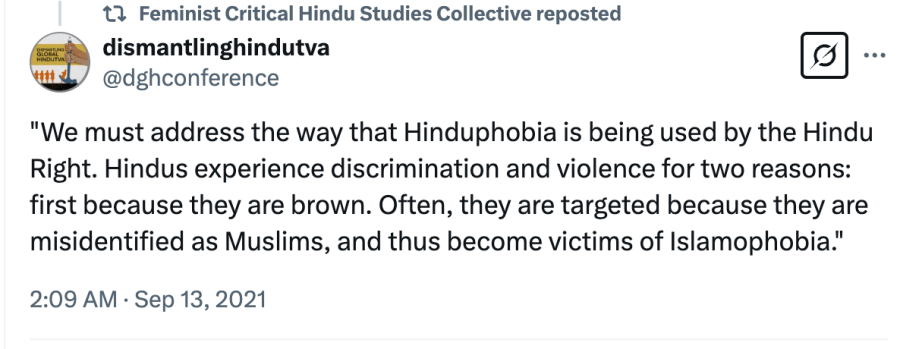
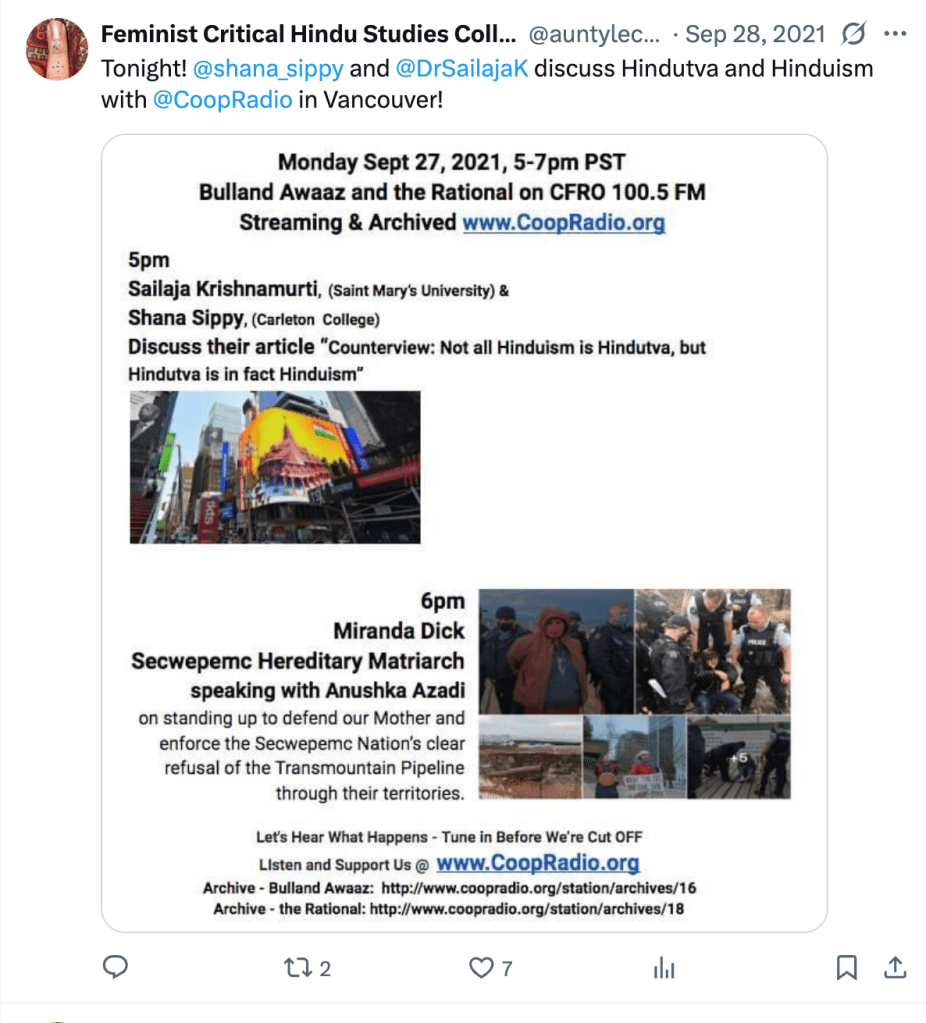
In a bizarre article “Not all Hinduism is Hindutva, but Hindutva is in fact Hinduism” by Shana Sippy and Sailaja Krishnamurthy, the authors, “assert that although not all Hinduism is Hindutva, Hindutva is in fact Hinduism. We believe strongly that we must begin not by denying the Hinduness of Hindutva but by realising that Hindutva is a powerful, vocal, and insidious form of Hinduism.” On the issue that some global institutions and organisations wish to celebrate Hindu identity which according to them bolsters “Hindutva’s aims”. The authors argue that the notion of a Hindu identity “is a fairly recent construction that has been shaped by colonialism and nationalism” and that a Hindu identifying as Hindu signals “that one is not something else” which produces, “the hate that we see in Hindutva’s many forms.” Sippy and Krishnamurthy contend that Hinduphobia is a fabricated concept and a smokescreen for Hindutva, suggesting that the discrimination faced by Hindus in Western countries arises from being wrongly perceived as Muslims, hence they are victims of Islamophobia. The authors conclude by stating that to address the issue of Hindutva, “we must first recognise that Hindutva is indeed a part of Hinduism.”
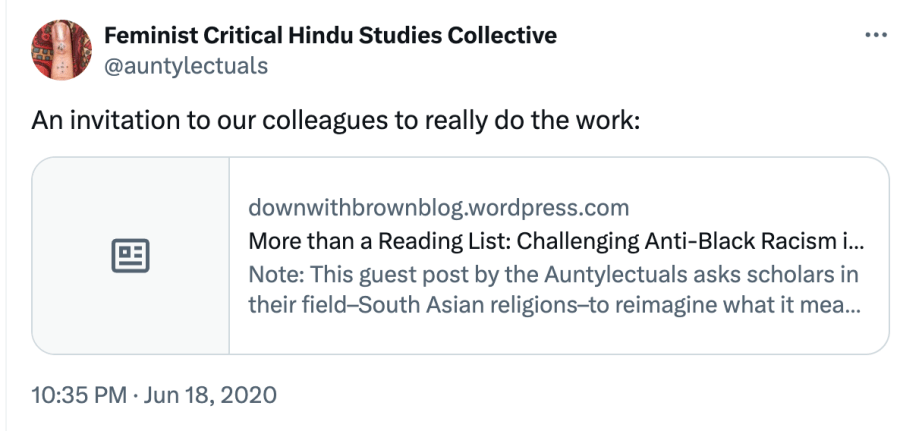
In their first article as FCHS, “More than a Reading List: Challenging Anti-Black Racism in the Field of South Asian Religions“, they agree that any study of South Asian religions should “integrate gender and race” along with critical race theory, gender, and sexuality studies into their classes and research. They contend that the study of South Asian religions was formed by “white supremacy, brahminical supremacy, and hetero-patriarchy”. They write, “racism, anti-Blackness, sexism, casteism, Islamophobia, and orientalism inherently inform the scholarship on and pedagogy of South Asian religions.” Indians are perceived as “model minority” in the US which the authors believe the status is “rooted in anti-Black racism.”
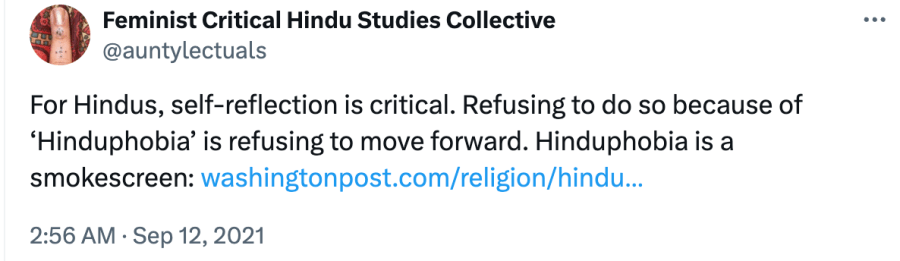
The FCHS wrote an article “Hinduphobia is a smokescreen for Hindu nationalists” in which they write, “We became involved as organizers because we have privilege as American and Canadian citizens and as people who benefit from caste privilege.” They write that “Hindutva is a political movement that claims that only Hindus can be legitimate citizens of India, excluding India’s thriving Muslim, Dalit, Bahujan and Adivasi communities.” According to them, “There is little evidence that Hindus on university campuses face widespread religious persecution, and their use of “Hinduphobia” is little more than a smokescreen. The term co-opts the language we use as social justice activists to challenge racism, white supremacy, casteism and Islamophobia, even as Hindu nationalists claiming victim status troll and threaten South Asian studies and Hindu studies scholars. The term, and the violent rhetoric employed by Hindutva supporters, is built on misinformation and fear, which are classic tools of fascism everywhere.” They write that “challenging a casteist, Islamophobic way of being Hindu does not equate to Hinduphobia.”
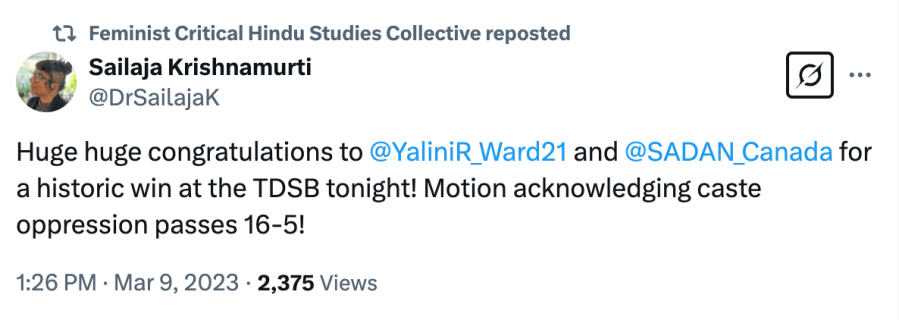
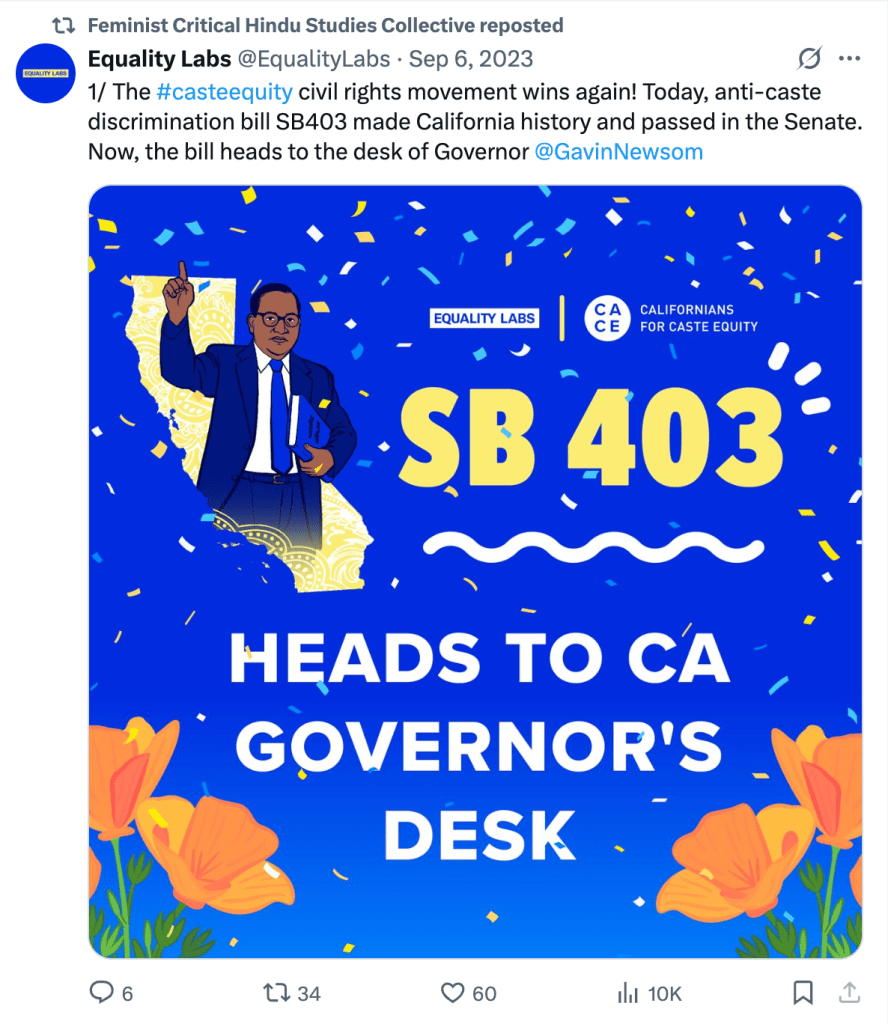
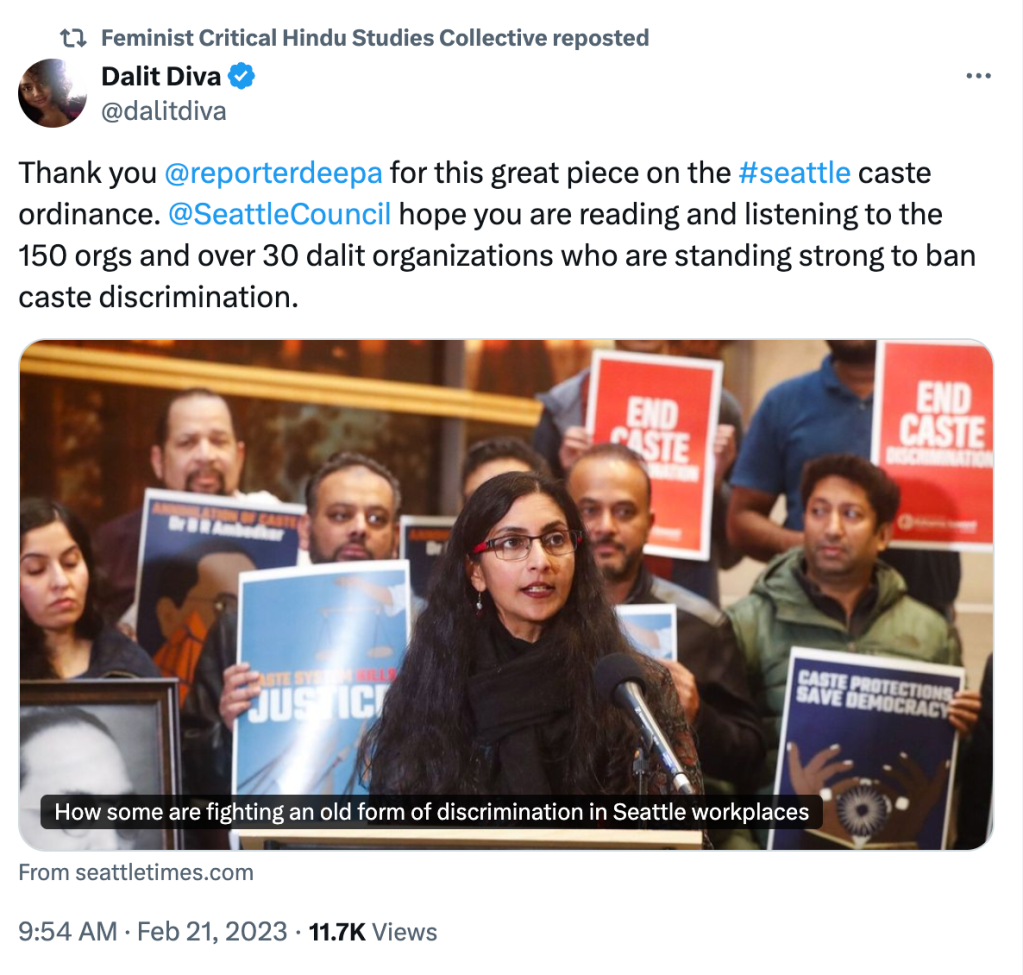
The FCHS wrote a letter to the Seattle City Council in support of the ordinance proposed by Kshama Sawant to ban caste-based discrimination. In the letter, they assert that “Hinduism and Hindu—not only arise in conjunction with forms of white supremacy and caste supremacy but are imbricated with them.” They argue that any Hindu advocacy group that opposes the caste bill is “aligned with right-wing ethnonationalist movements in India.” The authors base their argument on a caste survey conducted by Equality Labs that was flawed, unscientific and fabricated and specifically conducted to portray a skewed picture of caste in the US.
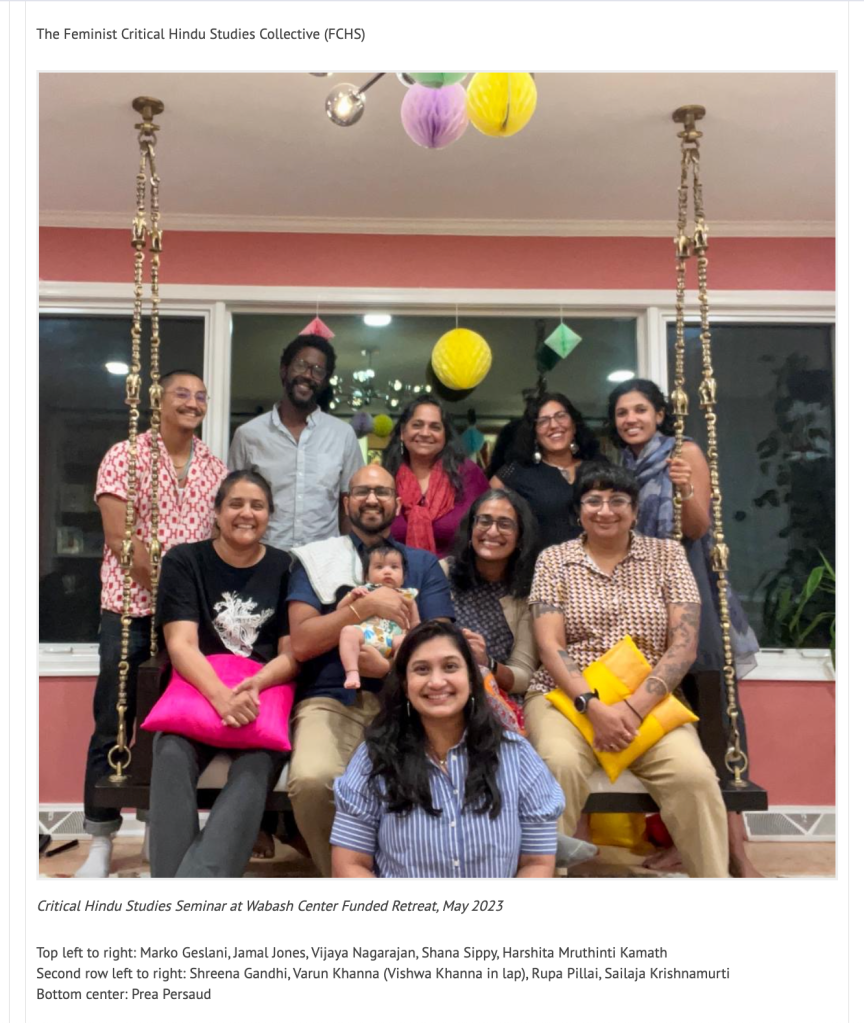
The FCHS participated in the retreat Reflections on a Critical Hindu Studies Pedagogies Seminar organised by the Wabash Center for Teaching and Learning in Theology and Religion. Wabash Centre‘s website mentions they are non-sectarian but its founders were Presbyterian Ministers. The main aim of this grant to is “to develop effective practices for teaching Critical Hindu Studies as racialized scholars” and “to help reform teaching within the field of Hindu Studies.”
The FCHS’s “Auntylectuals: a nonce taxonomy of aunty-power“, explore the “possibilities for upending the hegemonies that persist in South Asian culture, and in South Asian Studies. We are acutely aware of the need to resist Hindutva and Islamophobia and interrogate what is at stake in South Asian invocations of aunty.”
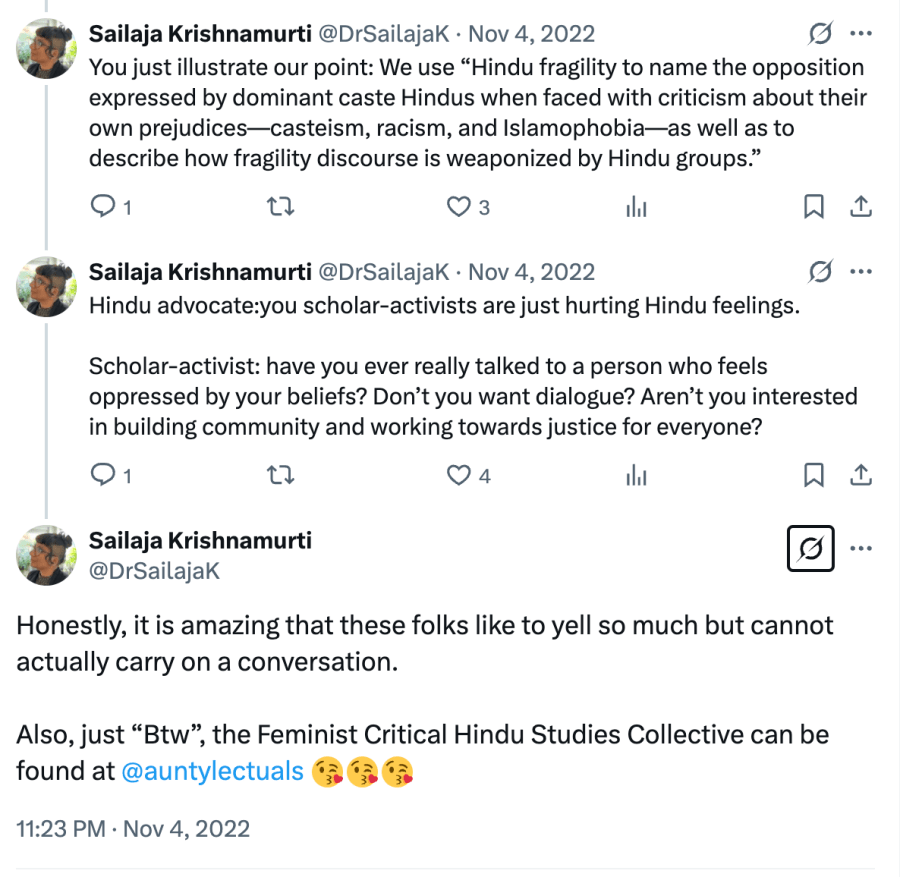
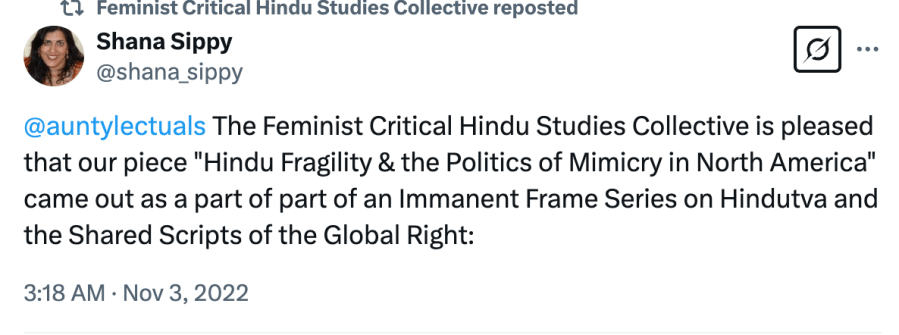
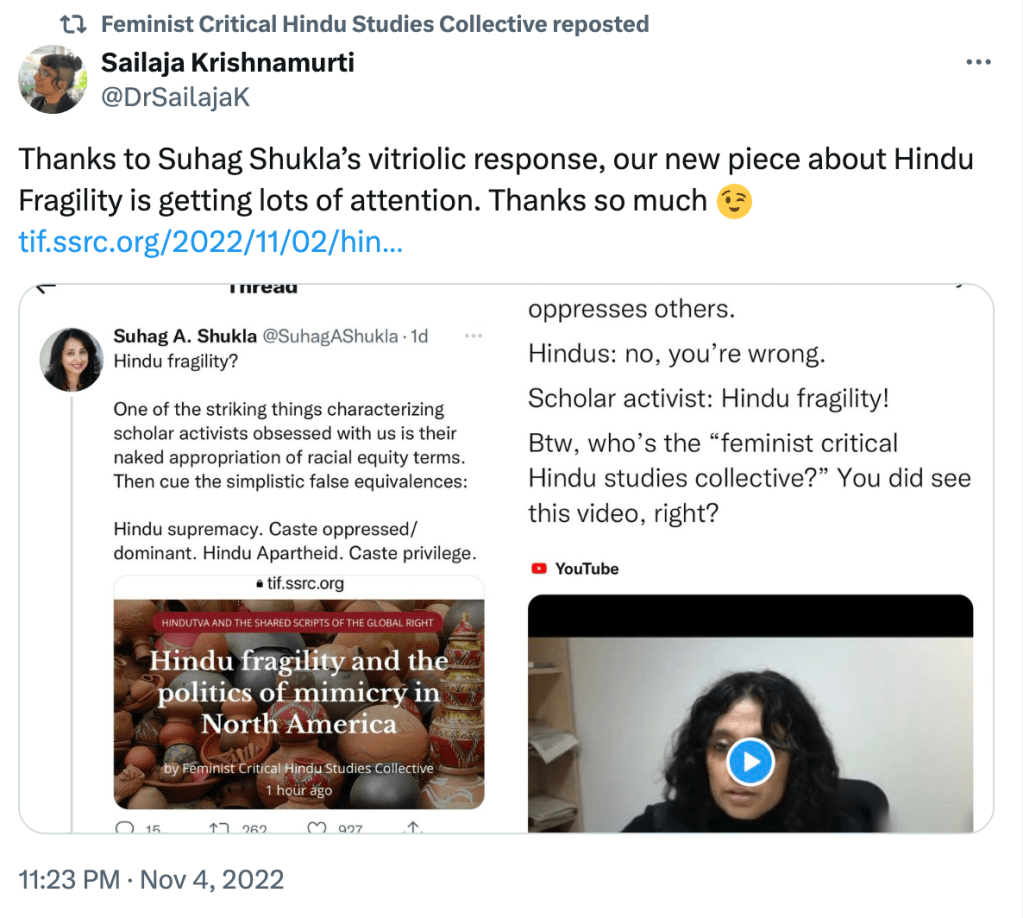
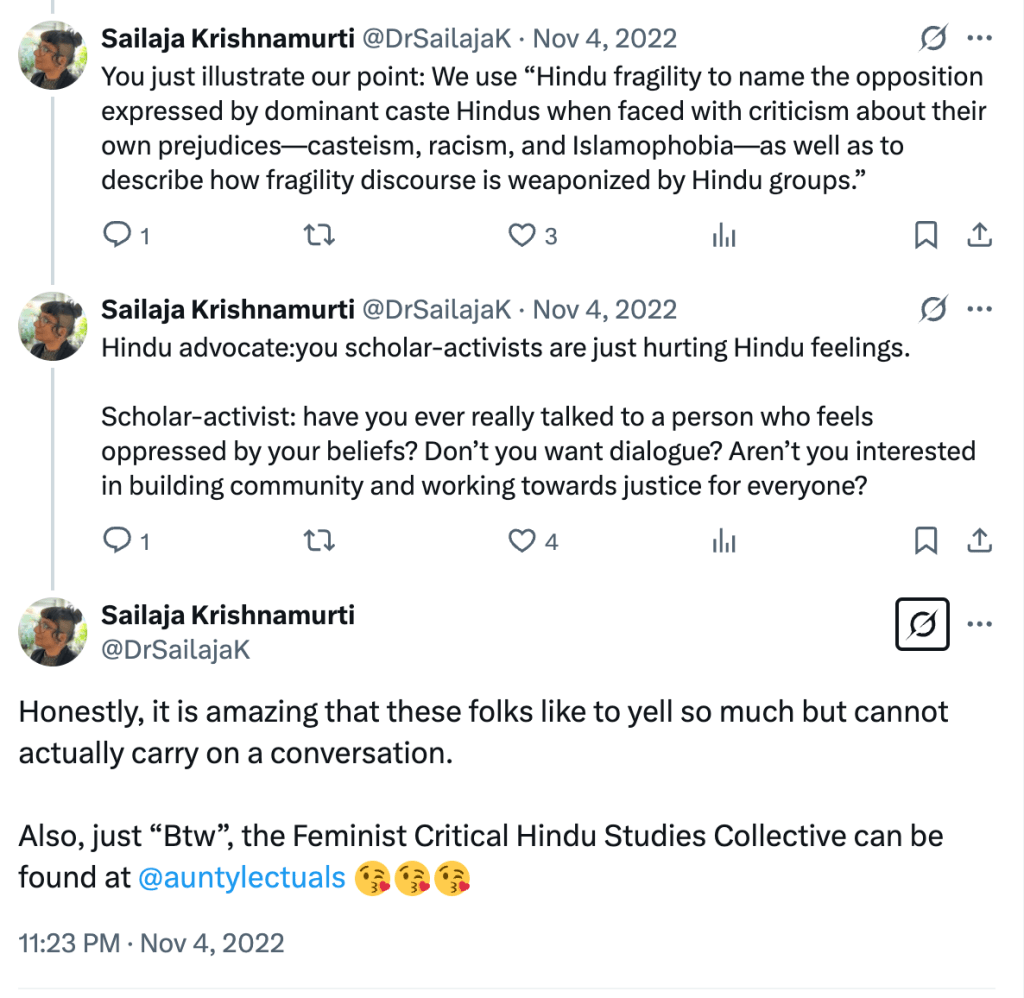
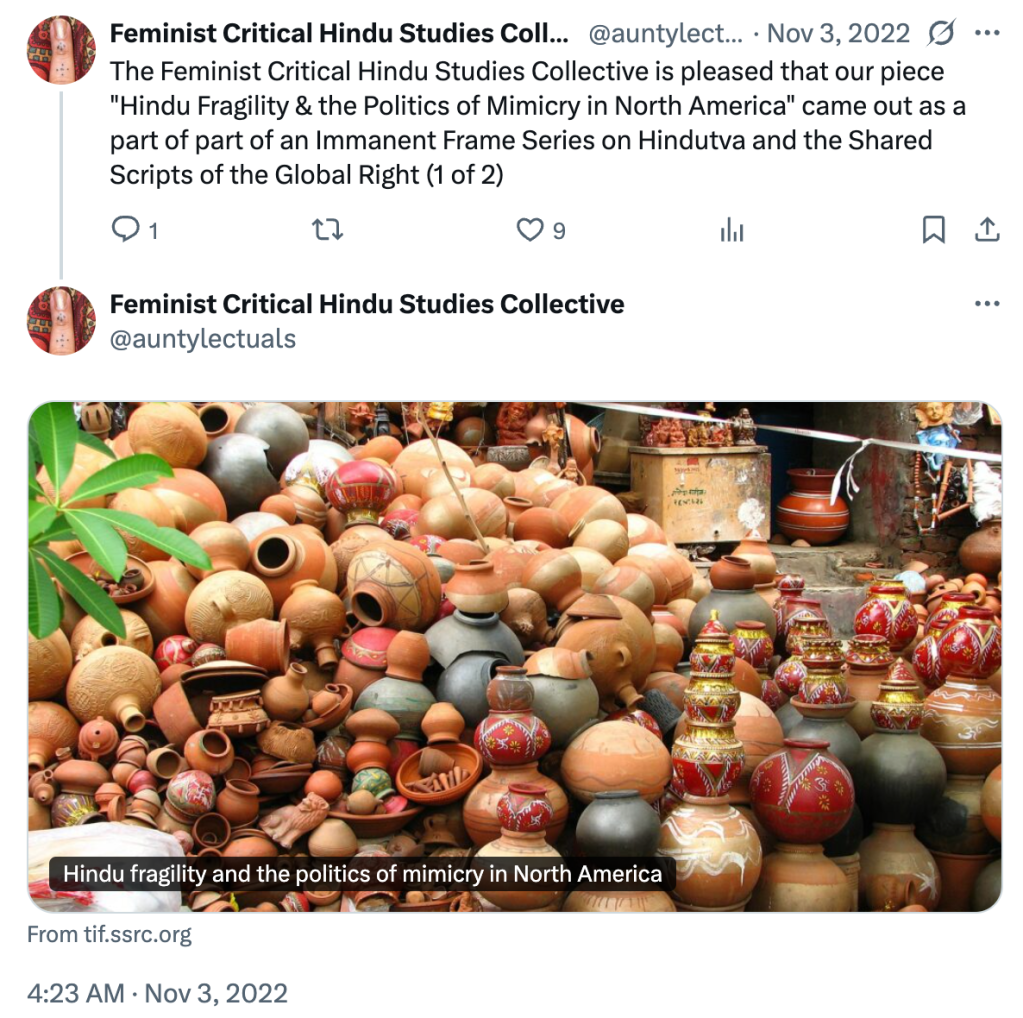
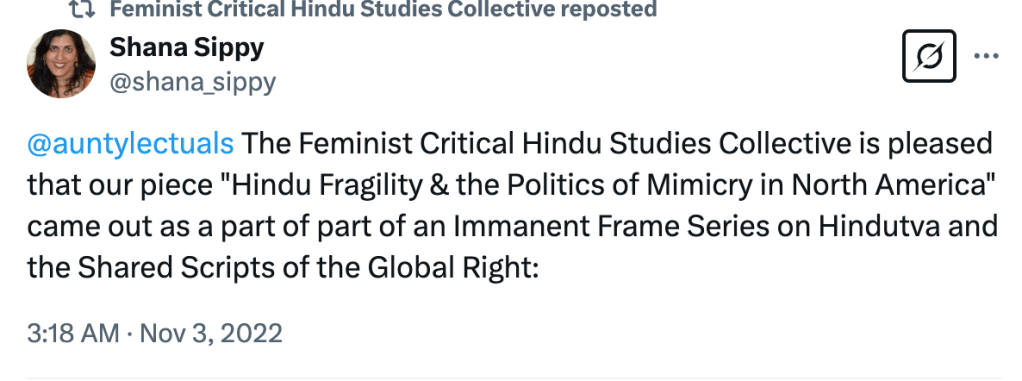
In “Hindu fragility and the politics of mimicry in North America“, FCHS draws parallels between White supremacy and Hindutva. They write, “By examining contemporary debates around caste in the United States, we illustrate how Hindu fragility—an expression of Hindu supremacist logics—is weaponized and performed by North American Hindus, mimicking white supremacy culture and propagating everyday Hindu nationalism.” They argue that in North America, Indians as “model minority” is a myth that presents Hindus are victims of discrimination and not as perpetrators of discrimination. They describe Hindu fragility as “Hindu fragility then refers to how caste-privileged Hindus leverage ideas about their collective precarity and vulnerability, making it seem that any criticism of Hinduism or India harms Hindus and enacts violence against the community.” They further state that Hindu groups practice “homohindunationalism” that expresses “solidarity with LGBTQ+ groups but reject working with anti-caste groups.” They mention the Indian Union territory of Jammu & Kashmir as “occupied by India”. In conclusion they write “Caste supremacy in South Asia and South Asian diasporas, which has been sustained over thousands of years through a wide-array of religious texts and practices as well as economic and social structures, upholds brahminical patriarchy at the expense of caste-oppressed communities, religious minorities, and others not included in the vision of Hindu supremacy.”
FCHS X handle: @auntylectuals


 STOP HINDU HATE ADVOCACY NETWORK