
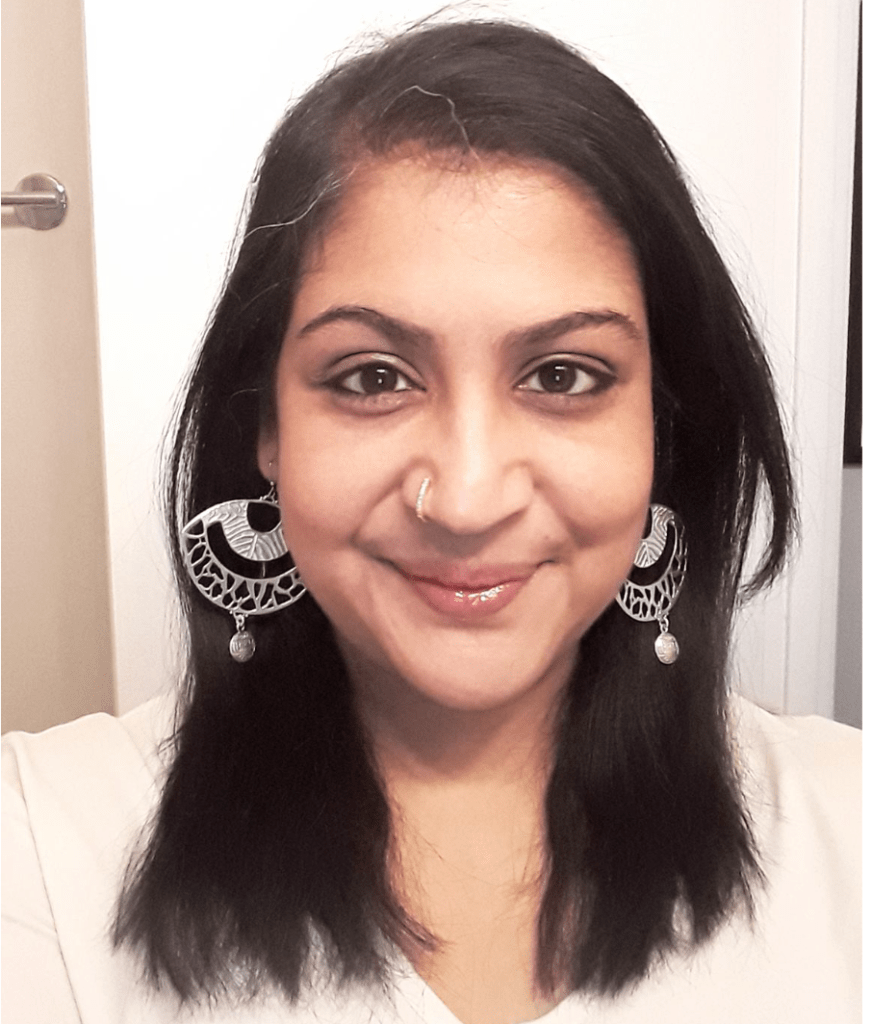
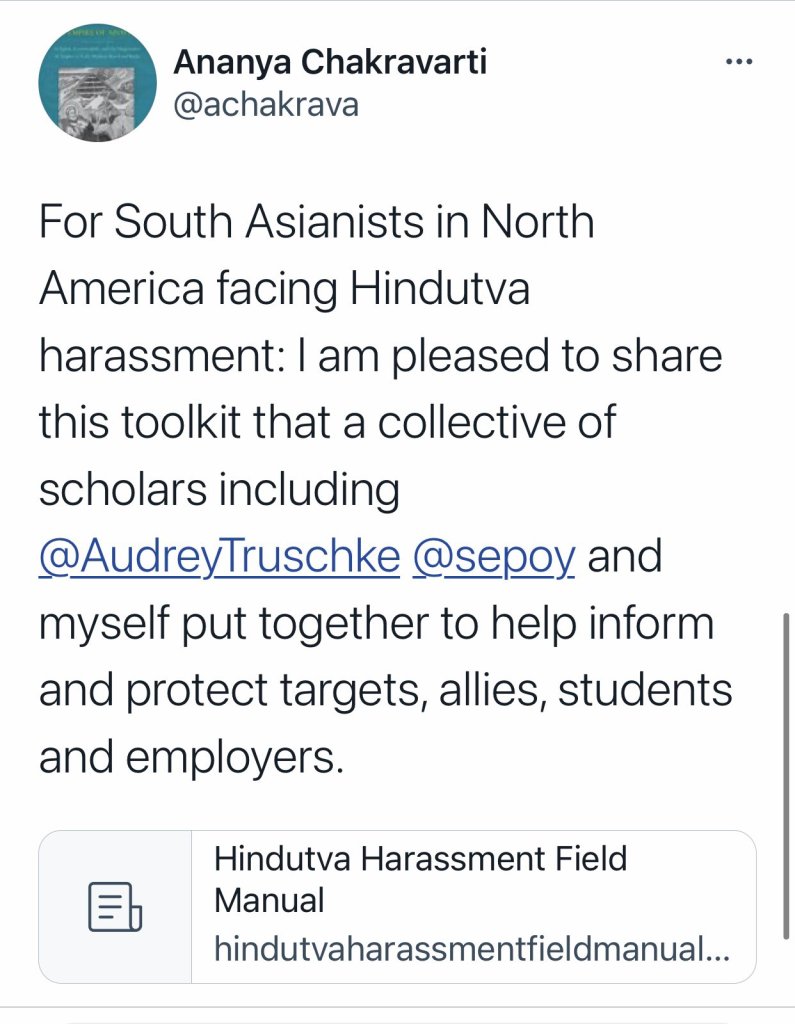
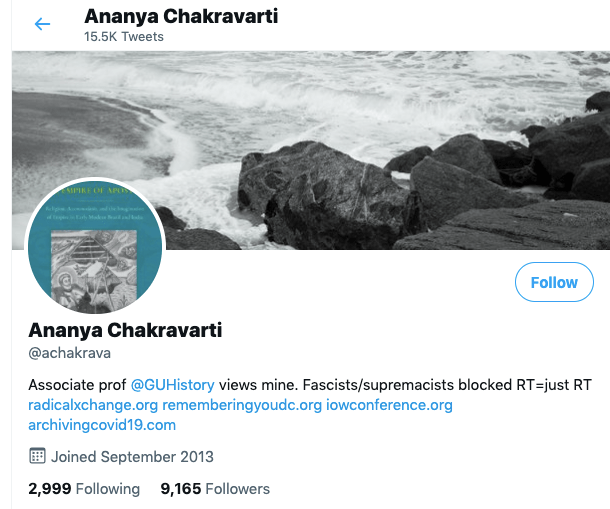
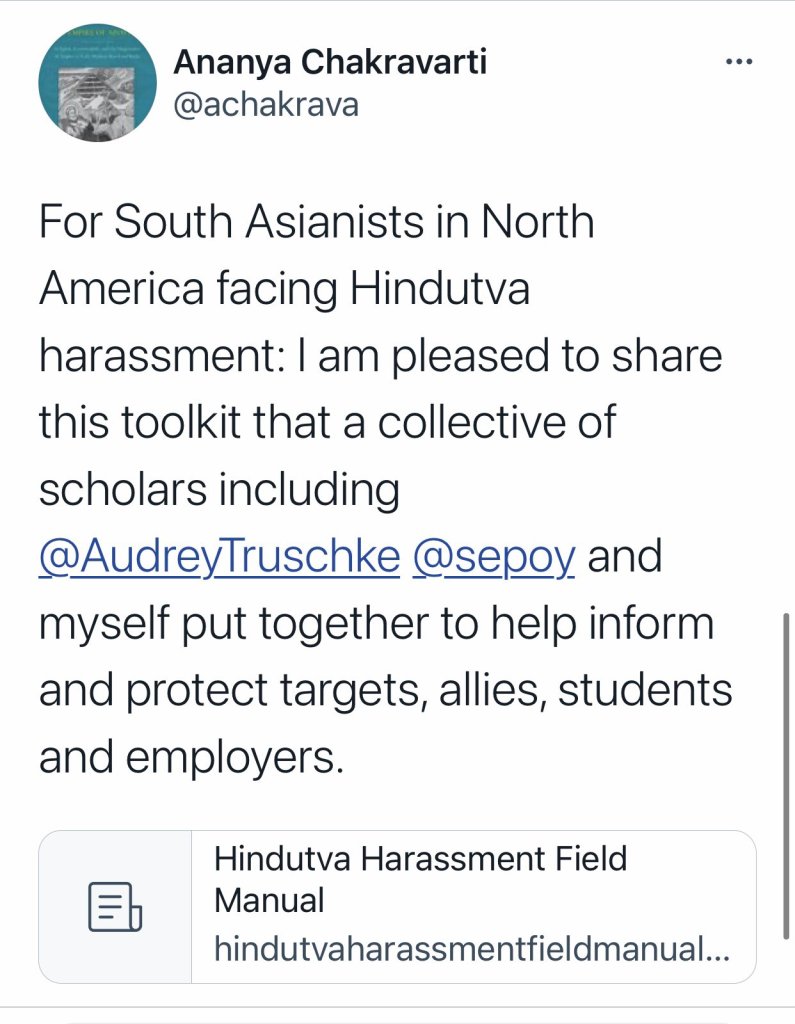
Ultra-radical leftist and Hindu hater Ananya Chakravarti is an Associate Professor at the Department of History at Georgetown University. She authored “The Empire of Apostles: Religion, Accommodatio and The Imagination of Empire in Modern Brazil and India“. She was also an organising committee member of Dismantling Global Hindutva. Ananya Chakravarti is a member of the South Asia Scholars Activists Collective (SASAC). The SASAC launched The Hindutva Harassment Field Manual that “offers educational and practical resources for the targets, allies, students, and employers of those subjected to Hindu Right assaults.” She is a member of board of directors of RadicalxChange Foundation, 501(3) nonprofit organisation that seeks to remake “global academy as a non-capitalist institution“. She is also the member of American Historical Association (AHA).
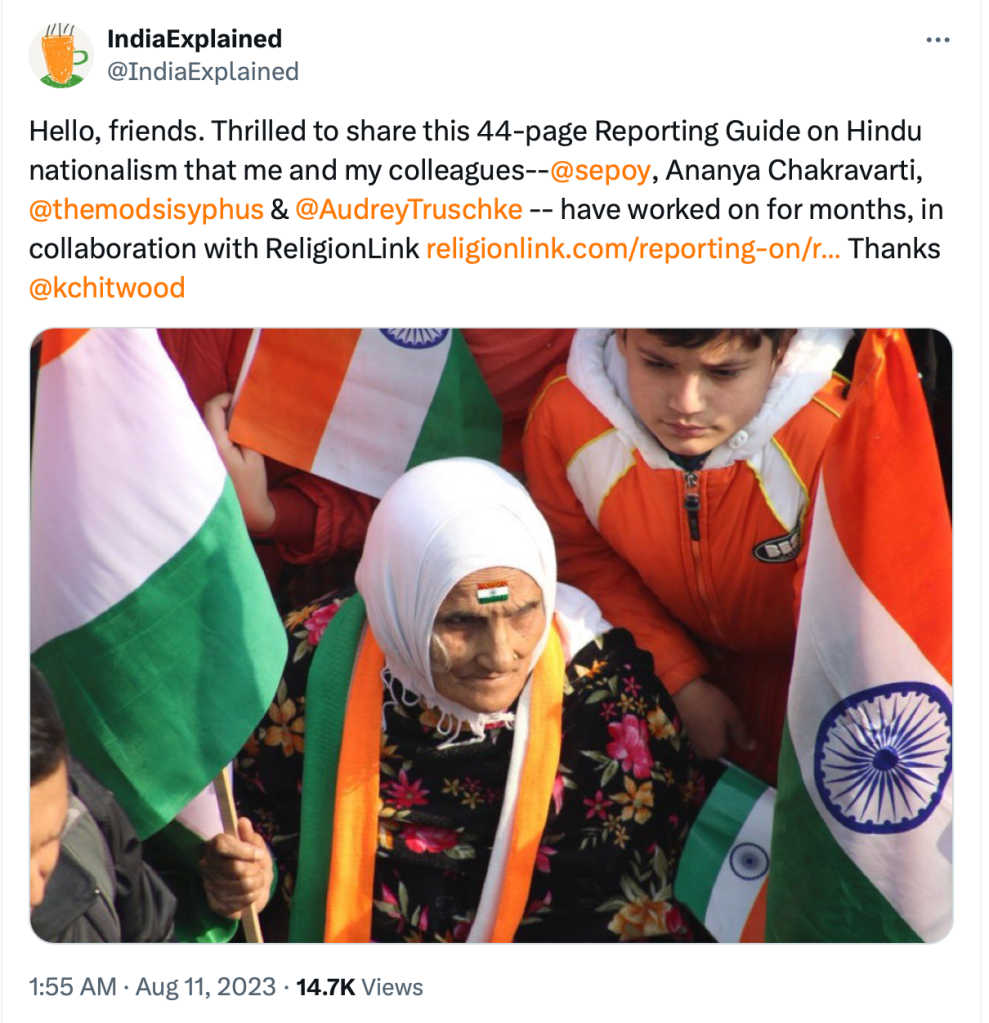
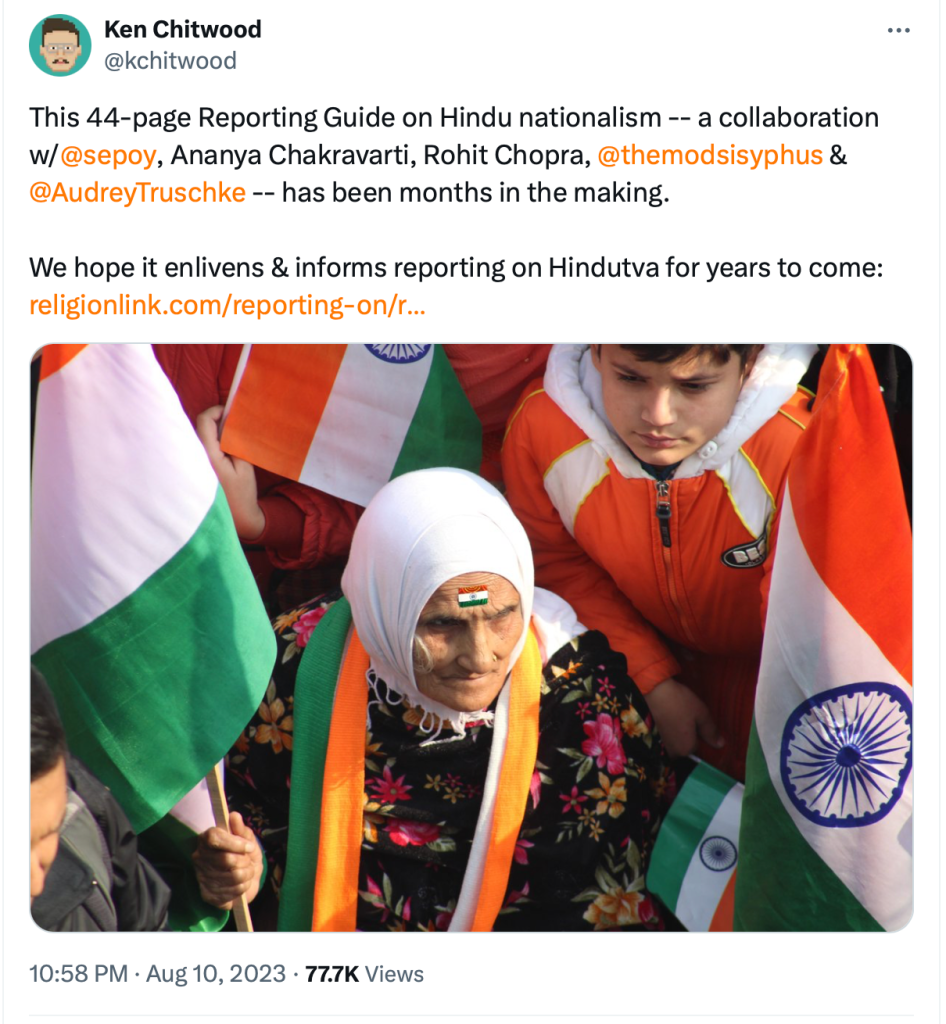
Ken Chitwood, a Lutheran theologian, pastor, and professor at the University of Bayreuth‘s Department of Religion, edited and produced a guide on Hindu nationalism for journalists. All members of the SASAC contributed to this guide, in which they describe Hindu nationalism as a “far-right political ideology of Hindu supremacy…Also known as Hindutva”. According to the guide Hindu nationalism/Hindutva’s core objective is to transform India, “a constitutionally secular state, into a Hindu Rashtra (nation) where some Indians will be more equal than others”.
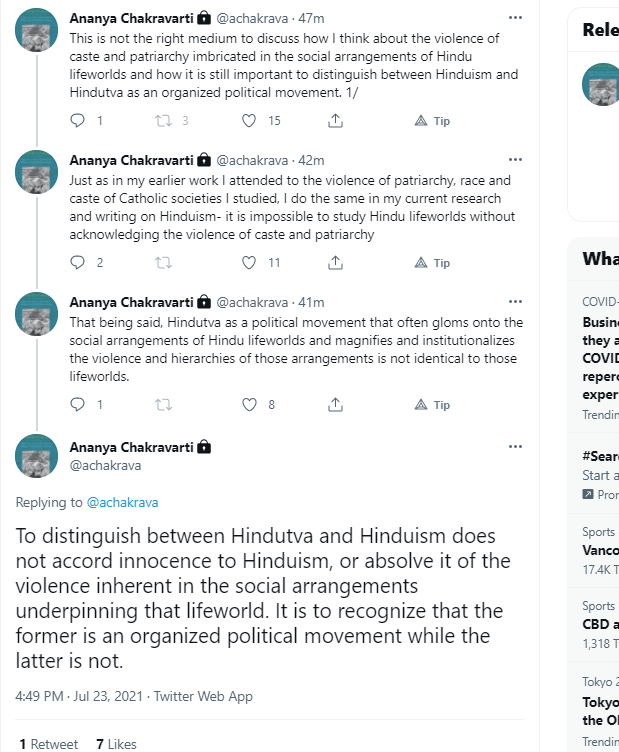
Ananya Chakravarti was one of 1100 signatories who issued a “Letter of Support” in favour of the extremely Hinduphobic Dismantling Global Hindurva conference in 2021. The letter stated that they reject the conflation of Hindutva with Hinduism and “Hindutva is NOT a religion, nor is it a synonym for Hindu cultural identity, or “Hindu-ness.” Hindutva is an authoritarian political ideology that historically drew inspiration from Nazi Germany and Mussolini’s Italy”. The letter further stated that “the current government of India [in 2021] has instituted discriminatory policies including beef bans, restrictions on religious conversion and interfaith weddings, and the introduction of religious discrimination into India’s citizenship laws. The result has been a horrifying rise in religious and caste-based violence, including hate crimes, lynchings, and rapes directed against Muslims, non-conforming Dalits, Sikhs, Christians, adivasis and other dissident Hindus. Women of these communities are especially targeted. Meanwhile, the government has used every tool of harassment and intimidation to muzzle dissent. Dozens of student activists and human rights defenders are currently languishing in jail indefinitely without due process under repressive anti-terrorism laws.”
In “Hindutva’s threat to academic freedom” Ananya Chakravarti, as part of SASAC, calls for the recognition of Hindutva as a political hate ideology that is distinct from Hinduism. She argues that Hindutva has “been instrumental in transforming India’s once pluralistic and secular democracy into an ethnonationalist state defined by Hindu supremacy and human rights violations.” The authors unwittingly agree that they want to gate-keep India’s history, preventing Hindus from seeking out India’s true history. “Such hate seeks to undermine our genuine, nuanced research, which presents a vision of South Asian history, religions and cultures as multifaceted and pluralistic. Our scholarship undercuts Hindutva’s project to remake India and Indian history.”
Again, as part of SASAC, Ananya Chakravarti in “Caste discrimination laws remain fraught. Here’s why they shouldn’t be” emphasises the need for policies against caste discrimination in the USA. She writes “Much of the pushback against policies seeking to ban caste-based discrimination has come, unsurprisingly, from dominant-caste individuals. Many members of our collective also belong to dominant castes, and we all teach students from diverse caste backgrounds. We know firsthand that confronting the privilege granted to those at the top of this social hierarchy can lead to tension and discomfort.”
In an interview with Matthew Keough, Ananya Chakravarti says “historians are a bulwark against the tide of Hindu nationalism. Erasing the past is the first step to erasing minority communities and their political claims in the present. This erasure is what historians stand against.”
In Alexandra Levy’s article “Trolling History,” she discusses individuals who challenge the leftist narrative, referring to them as ‘trolls’, Ananya Chakravarti says “Hindu nationalists, too, have leveraged the conversation around social justice in academia to silence academic scrutiny of their ideology or the current regime in India”.
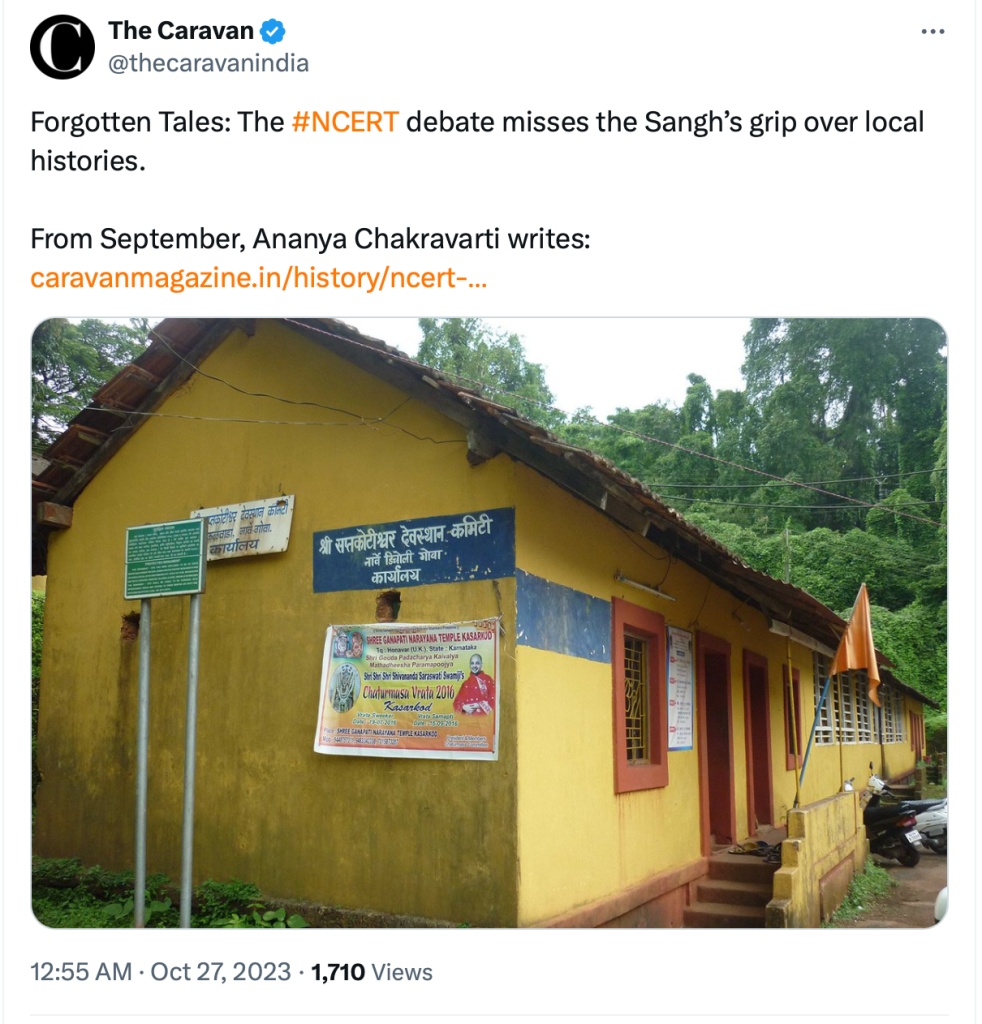
In her essay “Forgotten Tales” for The Caravan, Ananya Chakravarti discusses the controversy surrounding the National Council for Educational Research and Training (NCERT) and its efforts to rewrite Indian history textbooks to “align with Hindutva ideology”. She notes “The old battles over history have been vigorously renewed under the Narendra Modi government in recent years, with the wanton rewriting of history in school textbooks”. Chakravarti emphasises the importance of relying on credible historians, such as Richard Eaton, an American historian, for understanding pre-medieval Indian history, rather than depending on social media, which she claims has fuelled resentment against current historians. Interestingly, Richard Eaton, a professor of history at the University of Arizona, says “his work has Marxist ‘influences'” in an interview with Hindustan Times. In the interview, Richard Eaton says “The idea of India as a nation or even two nations is a modern construct. And there was no sustained pattern of a Hindu resistance to Muslim rule unlike Chinese history which was marked by unstable dynasties and their violent overthrow,”. Speaking on the Muslim rule in India from 1160 to 1760, Richard Eaton says that only 80 temples were destroyed by Muslim rulers than the “Sangh Parivar’s fanciful claims that 60,000 temples were demolished”.
While writing on caste for the American propaganda news portal, The Wire, Ananya Chakravarti says “Brahminism has shaped state ideology since the Gupta empire. Exceptions – like the 17th-century Nāyaka states that celebrated the commerce and cultural life of ‘left-hand castes’ – only prove the rule.” She further states that de-colonial studies historians who work on caste as a British concept enable the culture of upper-caste elites “to maintain privilege in both India and the US. The Indian educational system, which disproportionately benefits upper castes, allows them to migrate.” It is factually incorrect. Upper-caste Indians are discriminated against in India through affirmative actions such as reservations. In some Indian states, backward/lower caste reservations amount to 70% of total seats in educational institutions. Most higher educational institutions need low test scores for students from backward/lower castes and lower tuition costs.
Ananya Chakravarti and two other members of SASAC, Audrey Truschke and Rohit Chopra accused historian Dr.Vikram Sampath of plagiarism for his autobiography on India’s freedom fighter, Veer Savarkar. They wrote an open letter to the Royal Historical Society (RHS) where Sampath is a fellow, that he “borrowed largely” from an earlier essay by Dr. Vinayak Chaturvedi and that of Dr. Janaki Bakhle. Dr. Sampath in turn sued the three for defamation. In 2022, Delhi High Court ordered the passed an ad-interim order restraining them from “publishing any defamatory material against historian Vikram Sampath……on Twitter and other online or offline platforms.” In the letter the ‘concerned scholars’ blamed Dr. Sampath’s right-wing social media networks in India and the US to “harass, threaten, and intimidate these scholars for what constitutes free speech, proper ethics, and service to the profession”
Another controversy broke out when Ananya Chakravarti, Rohit Chopra and Audrey Truschke were found forging the signatures of left-liberal historians in a letter signed by 75 ‘concerned scholars’ expressing their support to them following their accusations on Dr. Sampath. India’s most wanted terrorist Zakir Naik, left historians Pratap Bhanu Mehta and Ram Guha, politician Sanjay Raut, and Rajmohan Gandhi allegedly signed the letter. Pratap Bhanu Mehta and Ram Guha later distanced themselves from the letter.
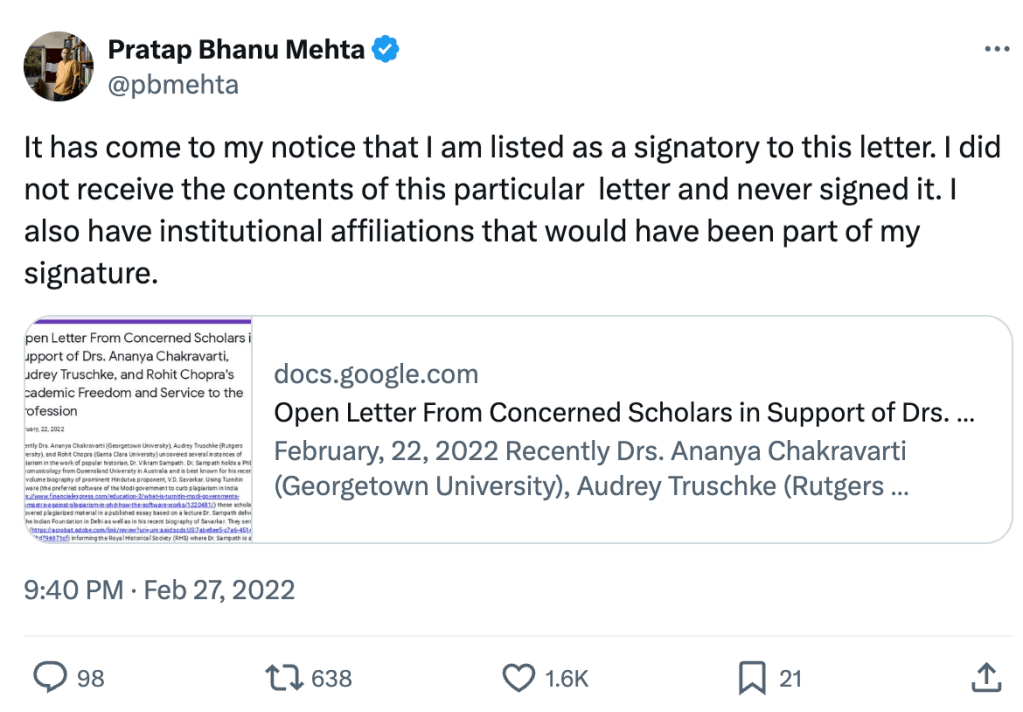
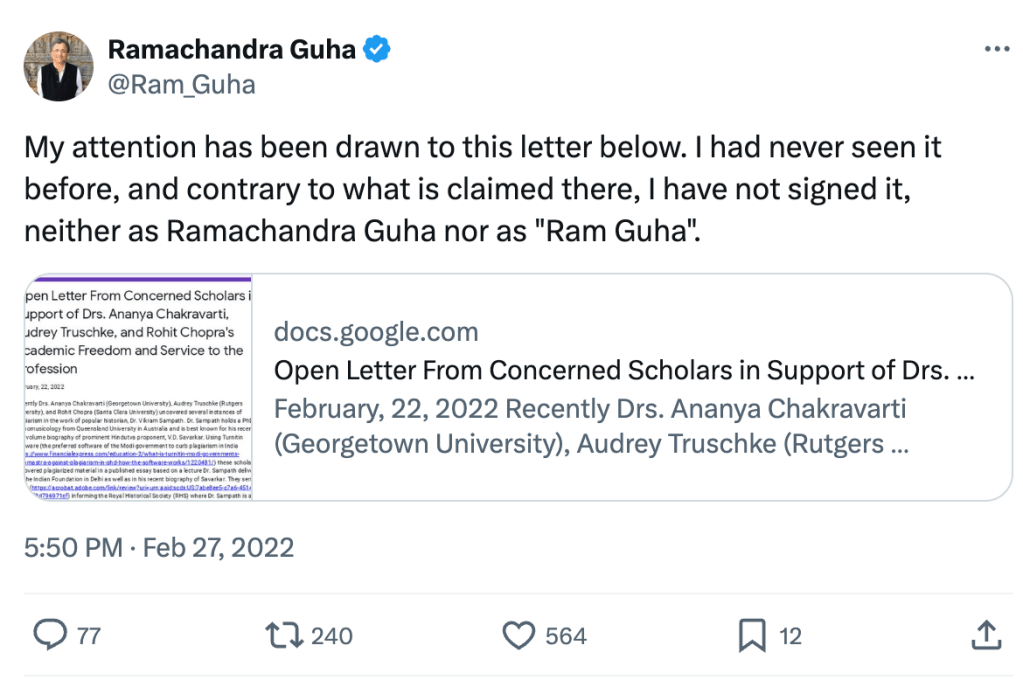
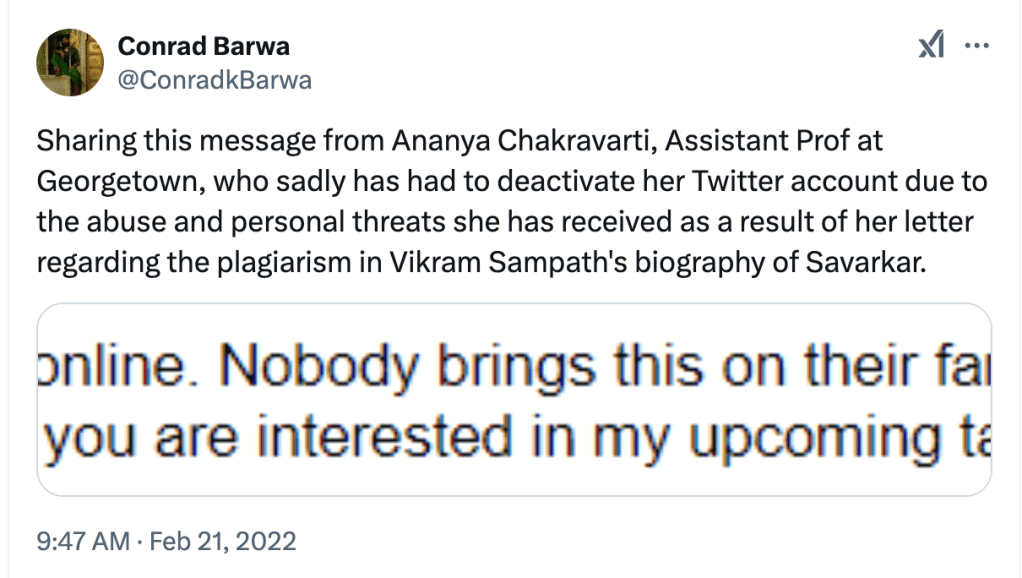
After her antics accusing Dr Vikram Sampath of plagiarism, Ananya Chakravarti deleted her profile from X (formerly Twitter) blaming abuse and personal threats.
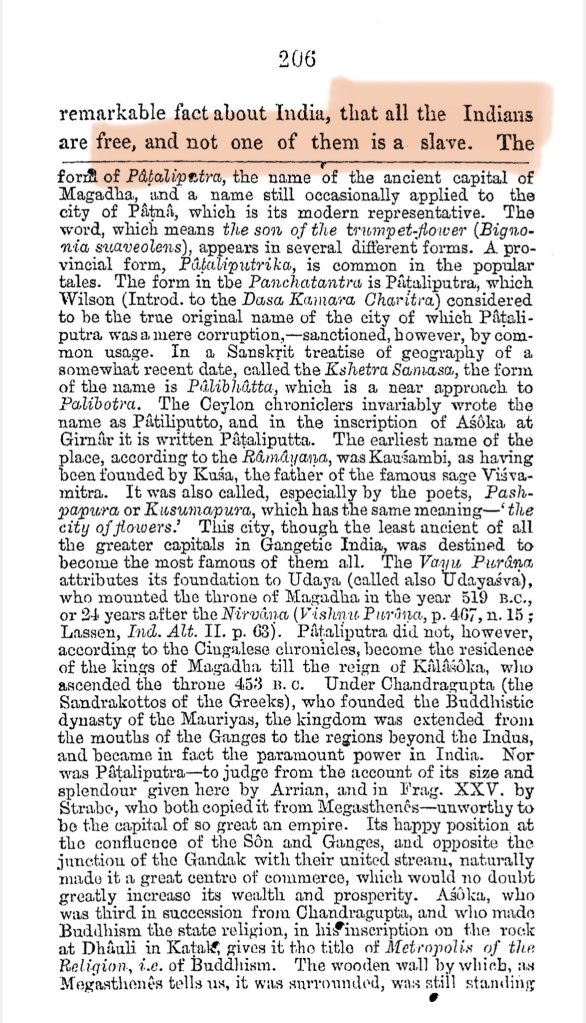
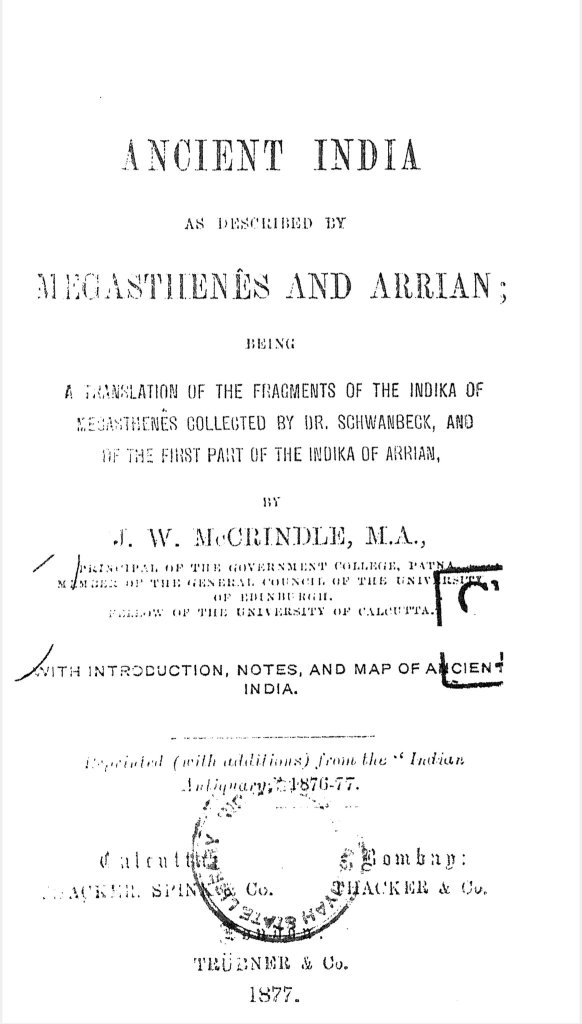
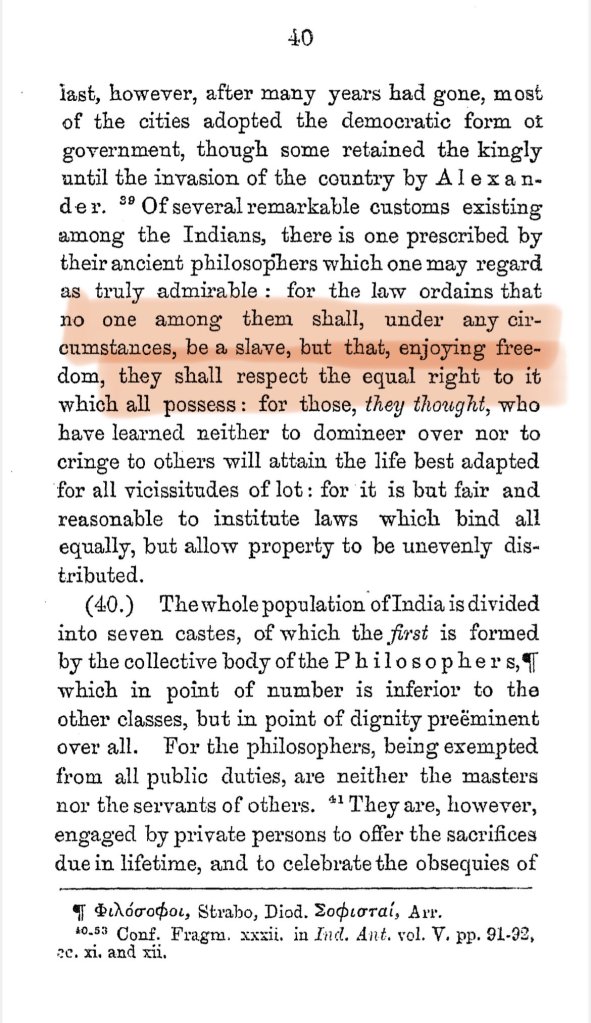
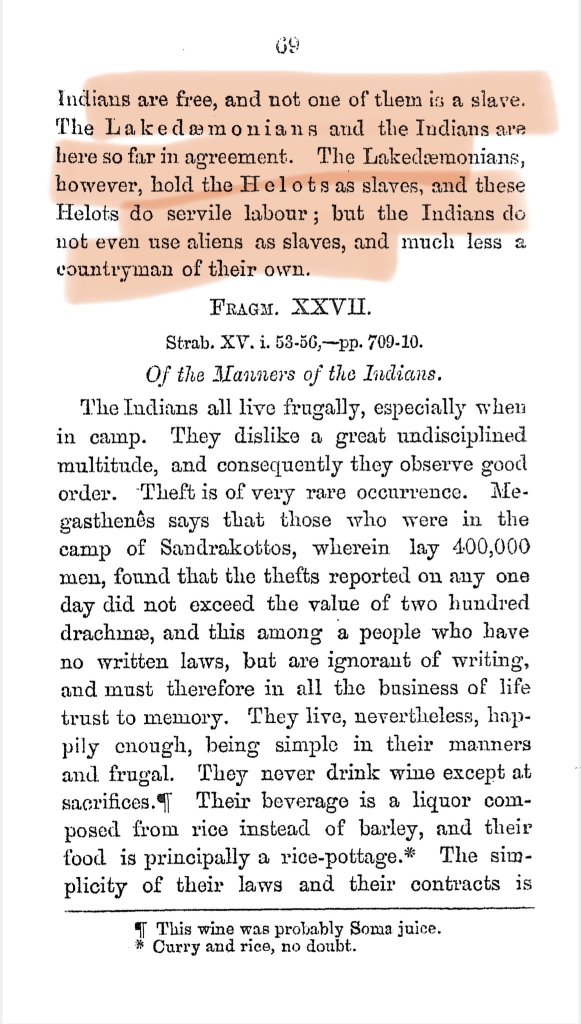
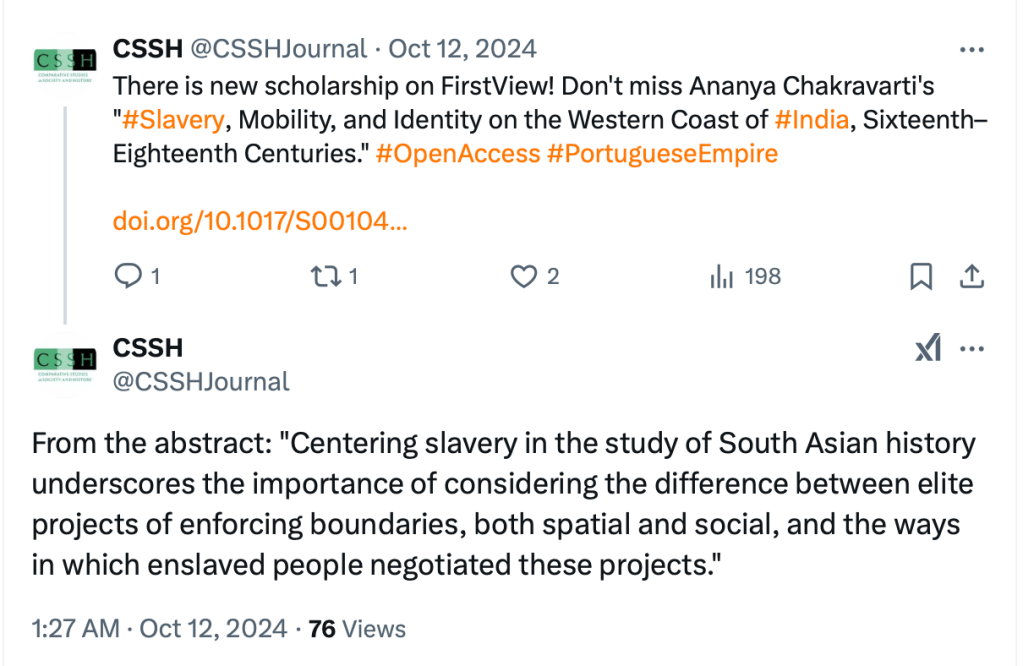
In her most recent essay “Slavery, Mobility, and Identity on the Western Coast of India, Sixteenth–Eighteenth Centuries” argues that “indigenous hierarchies and existing systems of slavery shaped Portuguese slavery, over time, indigenous society too was transformed by the extensive reliance on enslaved labor facilitated by European trafficking networks.” Greek historian Megasthanes (c. 310 BCE) noted in his book Indica, that India was the only civilisation where slavery was not existent while the rest of world was practising it in an industrial scale. Later another Greek historian Arrian too observed that “all the Indians are free, and not one of them is a slave”.
“This is a great thing in the land of the Indians, that all the Indians are free men, and there is no such thing as an Indian slave.” — Arrian Ind. 10.8
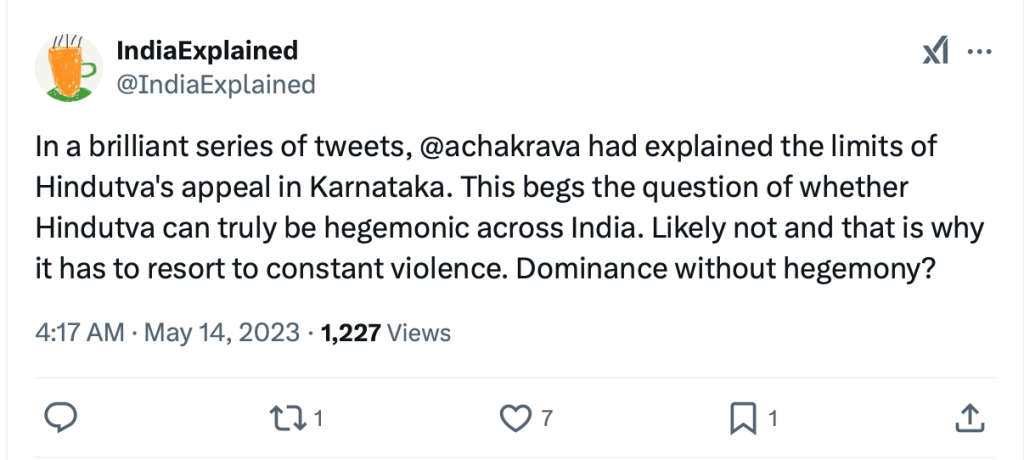
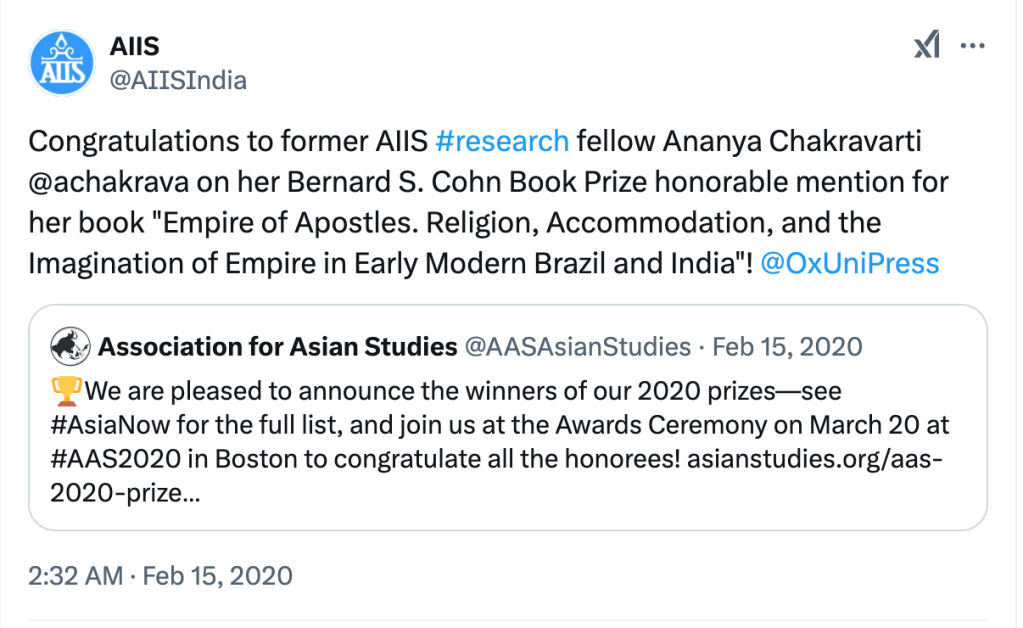
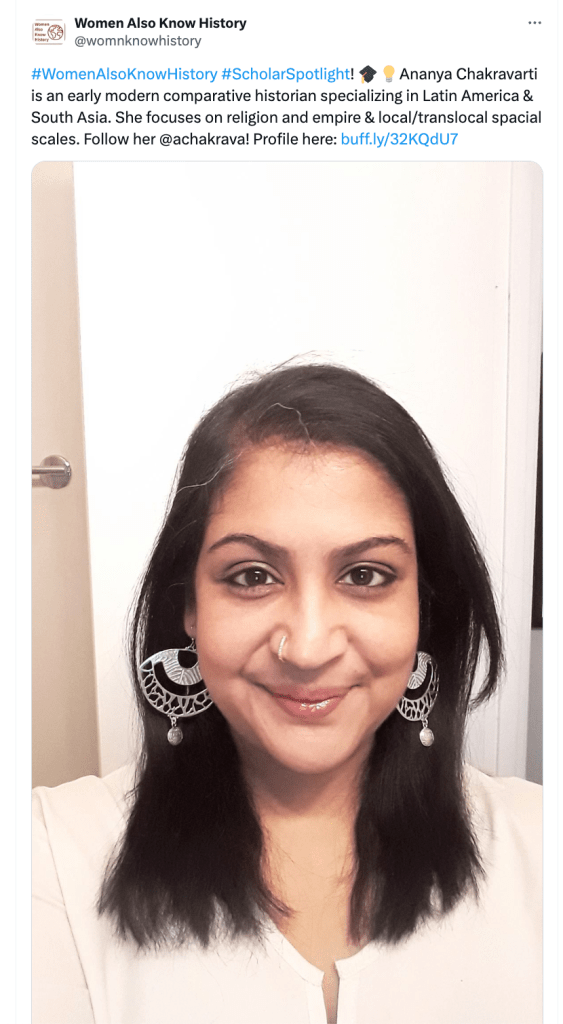
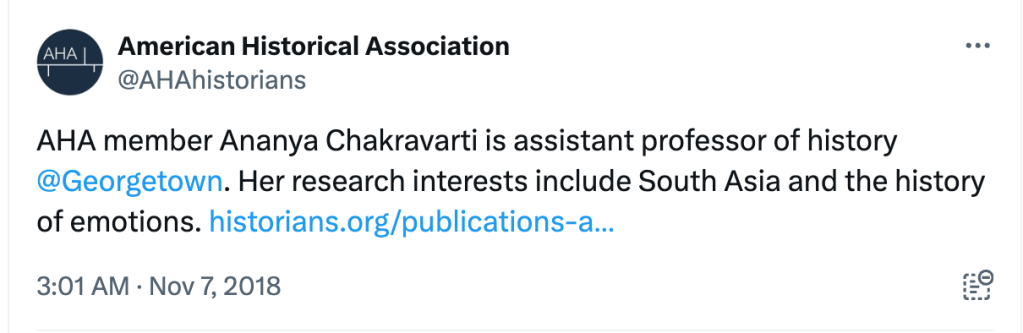
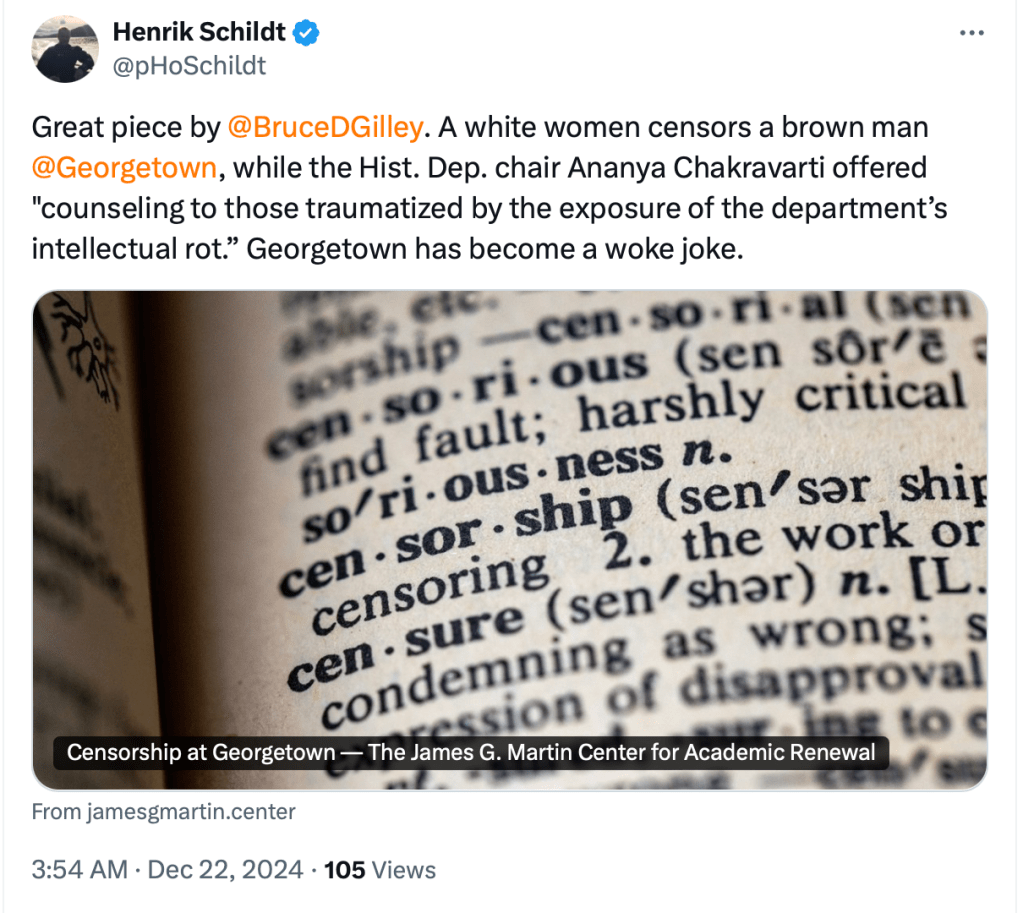
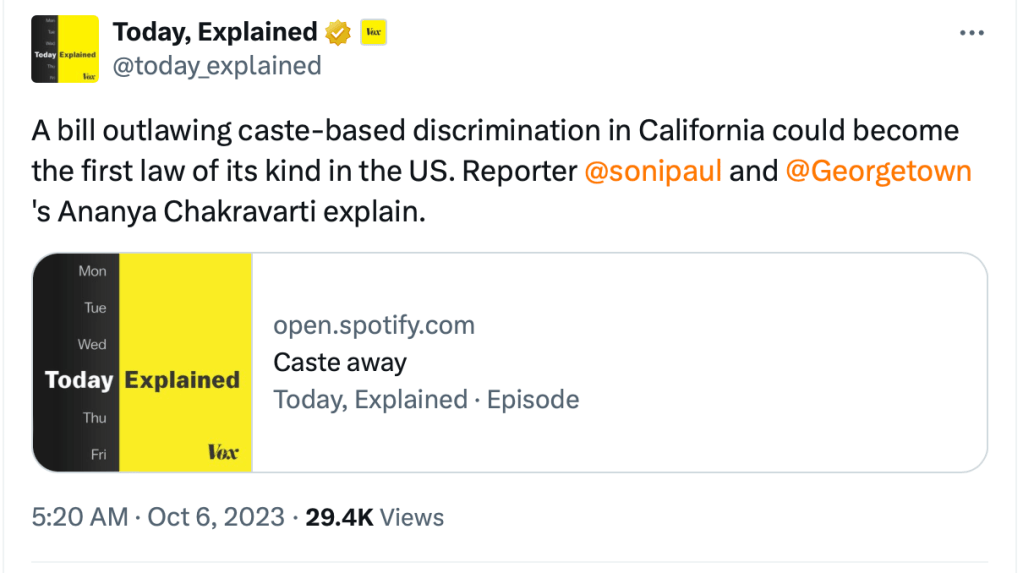
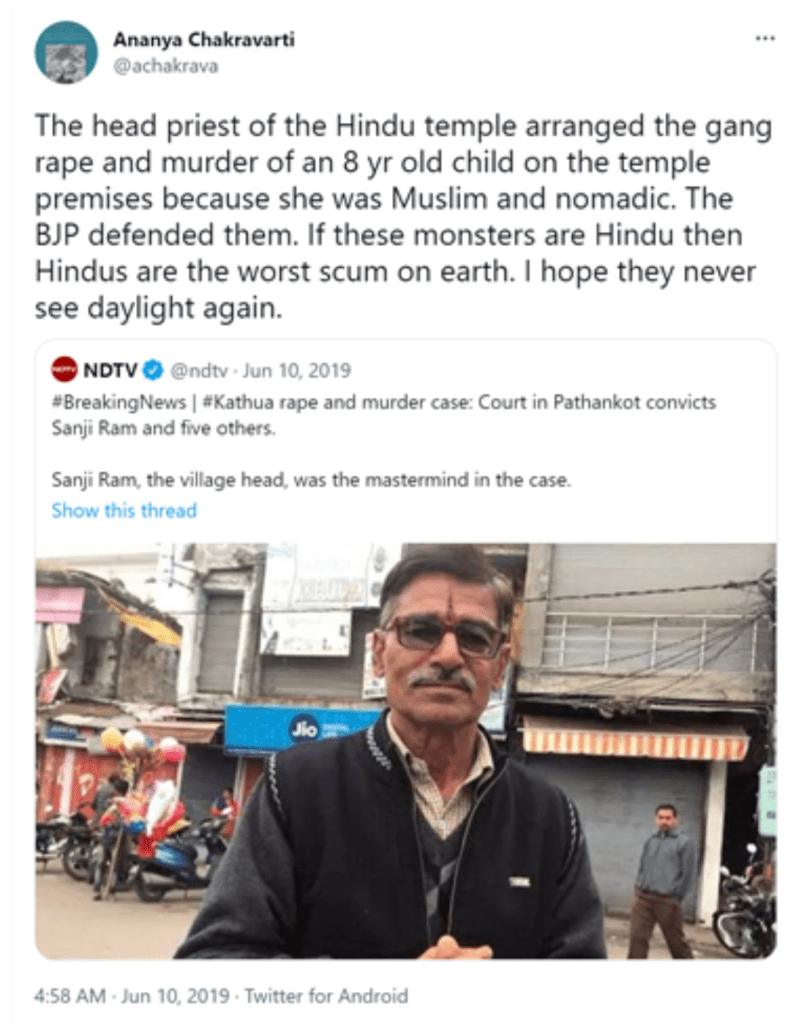
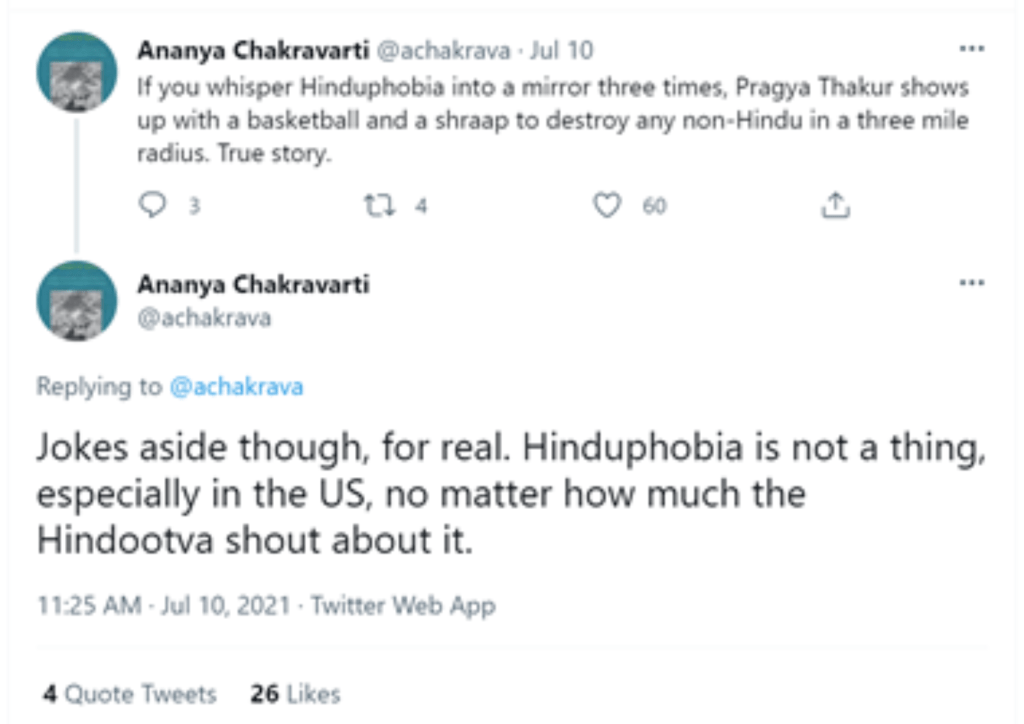
Below are some of Ananya Chakravarti’s posts and those related to her from social media.


 STOP HINDU HATE ADVOCACY NETWORK