

Sailaja Vatsala Krishnamurti is an Associate Professor, Gender Studies, Queens University (On leave July 1, 2024 through June 30, 2025) and an Assistant Professor at York Unviersity. She introduces herself as “a queer cisgender woman of Brahmin (upper caste) Hindu South Asian descent.” She is a member of the Feminist Critical Hindu Studies and was a participant at the Dismantling Global Hindutva Conference. The other members are Shana Sippy, Shreena Gandhi and Harshita Mruthinti Kamath.
In a bizarre article co-authored with Shana Sippy, “Not all Hinduism is Hindutva, but Hindutva is in fact Hinduism” Sailaja Krishnamurthy writes, “We assert that although not all Hinduism is Hindutva, Hindutva is in fact Hinduism. We believe strongly that we must begin not by denying the Hinduness of Hindutva but by realising that Hindutva is a powerful, vocal, and insidious form of Hinduism.” On the issue that some global institutions and organisations wish to celebrate Hindu identity which according to them bolsters “Hindutva’s aims”. The authors argue that the notion of a Hindu identity “is a fairly recent construction that has been shaped by colonialism and nationalism” and that a Hindu identifying as Hindu signals “that one is not something else” which produces, “the hate that we see in Hindutva’s many forms.” Sippy and Krishnamurthy contend that Hinduphobia is a fabricated concept and a smokescreen for Hindutva, suggesting that the discrimination faced by Hindus in Western countries arises from being wrongly perceived as Muslims, hence they are victims of Islamophobia. The authors conclude by stating that to address the issue of Hindutva, “we must first recognise that Hindutva is indeed a part of Hinduism.”
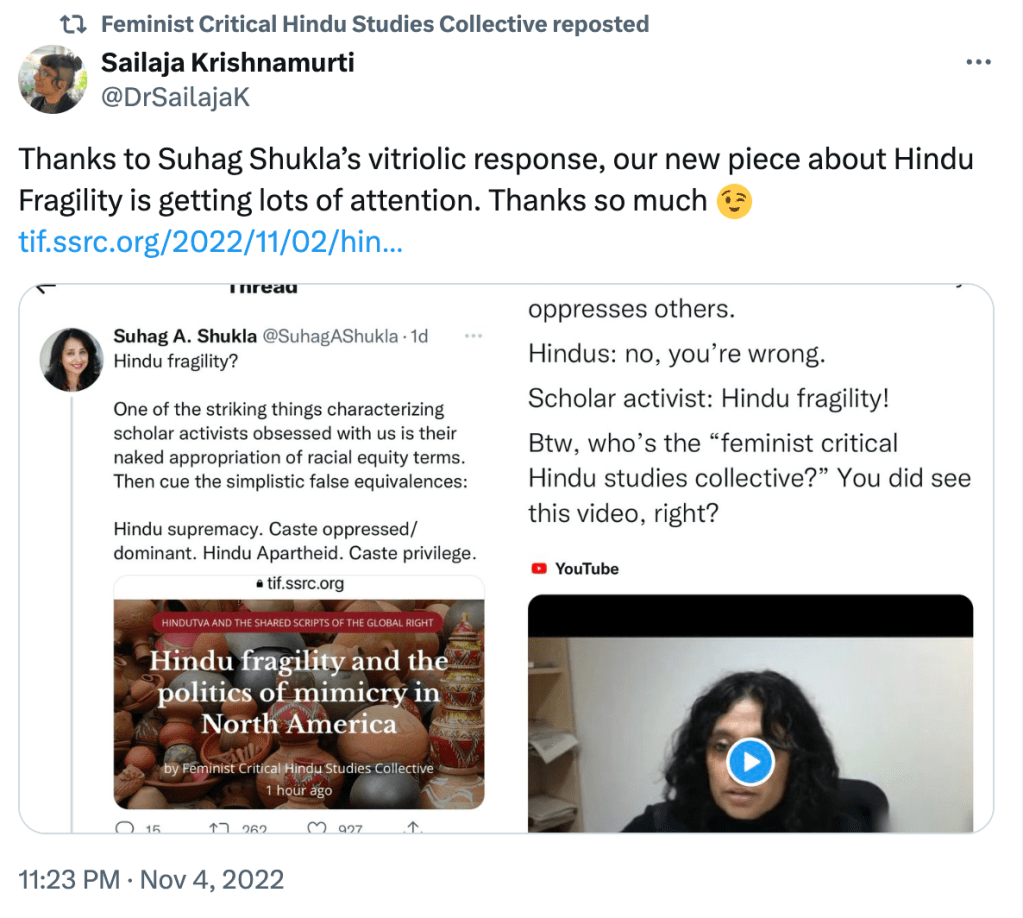
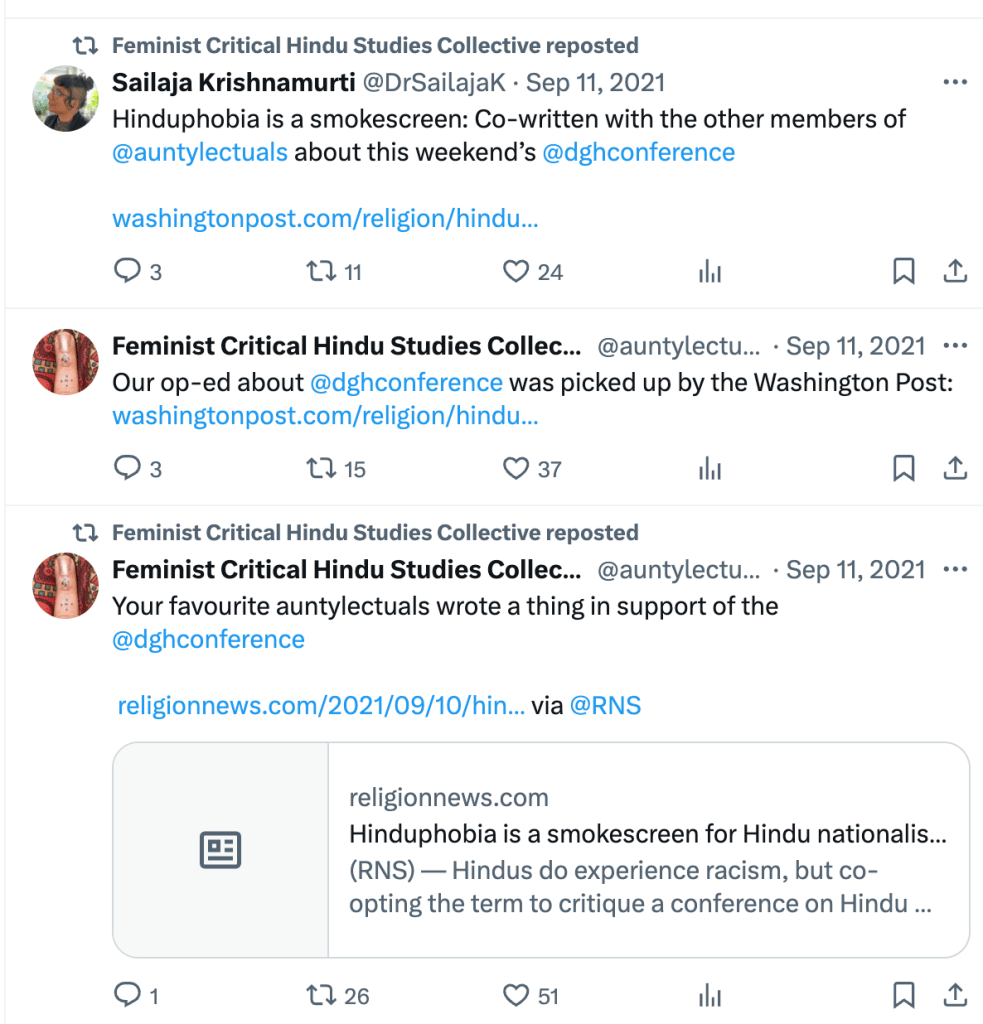
Sailja Krishnamurthi, as part of the Feminist Critical Hindu Studies Collective wrote an article “Hinduphobia is a smokescreen for Hindu nationalists” in which they write, “We became involved as organizers because we have privilege as American and Canadian citizens and as people who benefit from caste privilege.” They write that “Hindutva is a political movement that claims that only Hindus can be legitimate citizens of India, excluding India’s thriving Muslim, Dalit, Bahujan and Adivasi communities.” According to them, “There is little evidence that Hindus on university campuses face widespread religious persecution, and their use of “Hinduphobia” is little more than a smokescreen. The term co-opts the language we use as social justice activists to challenge racism, white supremacy, casteism and Islamophobia, even as Hindu nationalists claiming victim status troll and threaten South Asian studies and Hindu studies scholars. The term, and the violent rhetoric employed by Hindutva supporters, is built on misinformation and fear, which are classic tools of fascism everywhere.” They write that “challenging a casteist, Islamophobic way of being Hindu does not equate to Hinduphobia.”
In her article for York University, “Reading Hindu Religion in South Asian Comics and Graphic Novels“, Sailaja Krishnamurti “examines the use of Hindu myth and religious imagery as source material in comics and graphic narratives.” She focuses on Indian children’s comic book, Amar Chitra Katha (ACK). ACK has been a staple graphic novel for Indian children for generations. In the article Sailaja Krishnamurti writes “These kinds of comics reproduce narratives that generally support a mainstream, hegemonic understanding of Brahmanical Hinduism.” In the paper she argues that ACK conforms to “the ideology, and the iconography, of the fundamentalist Hindu right.” She makes the graphic novels into an identitarian battleground written purposefully to make Indian children into anti-Muslim ant-British one. She says,”Amar Chitra Katha thus plays a role in the transformation of Hindu nationalist ideology from an anti-Muslim to an anti-British one.” She further says ACK “is one popular cultural mechanism” that “can facilitate Hindu nationalists’ “conjuring up” of the history of the independence movement to serve as the ‘comic’ face of an increasingly fundamentalist agenda.”
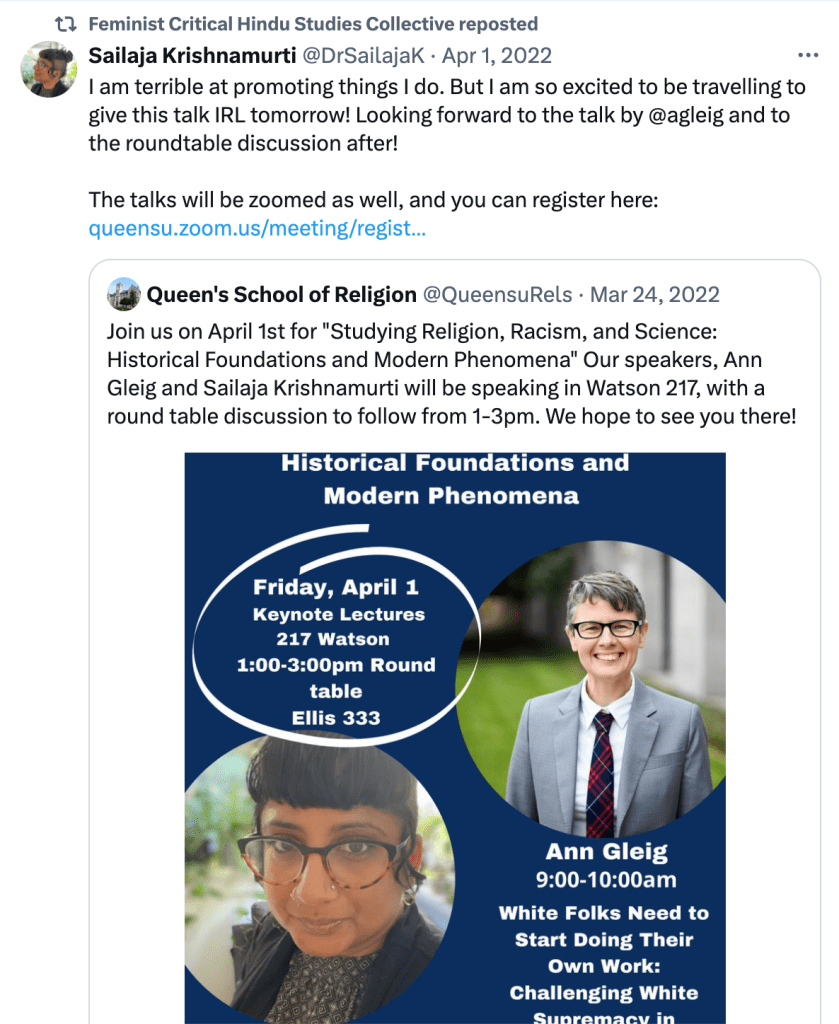
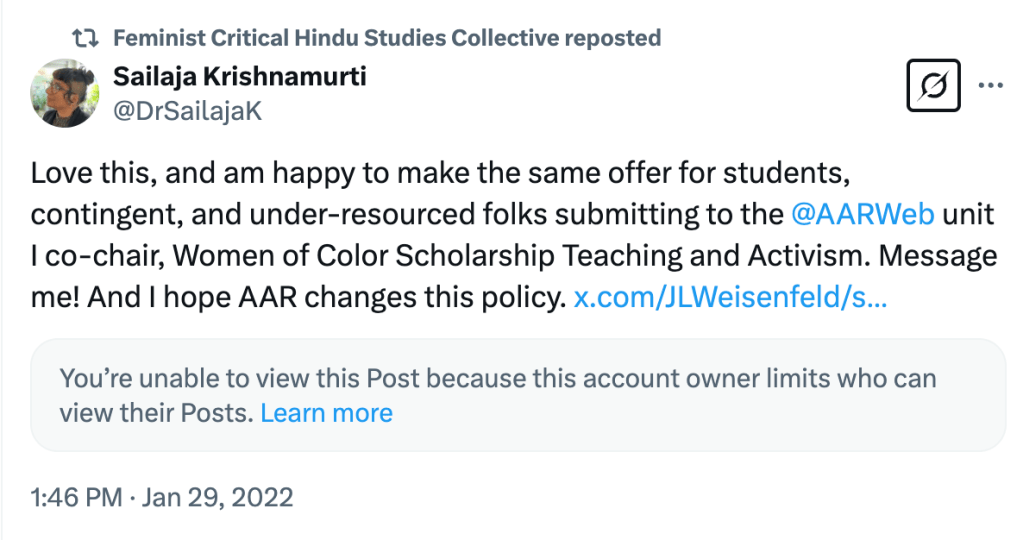
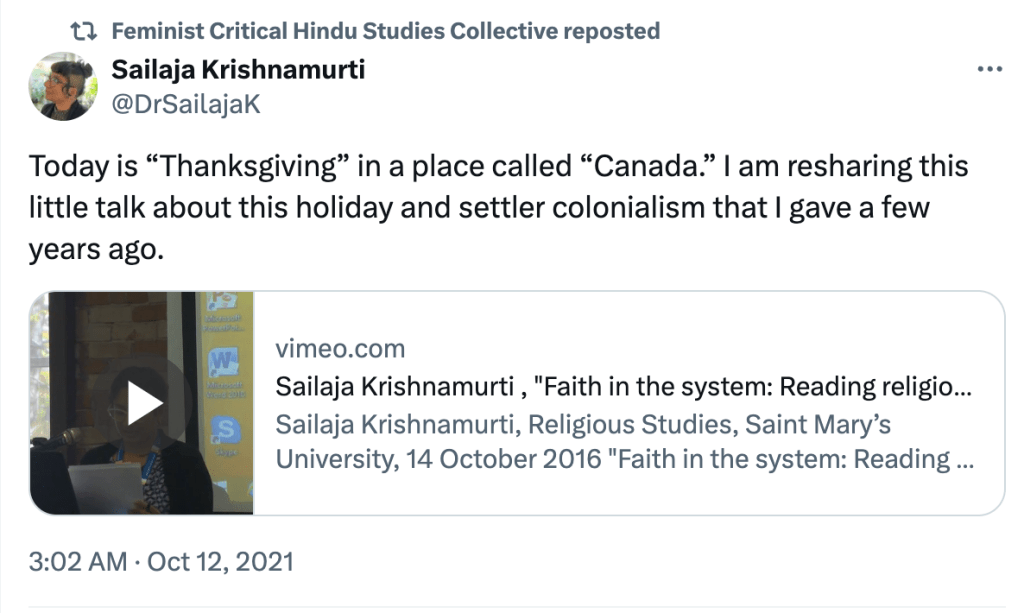
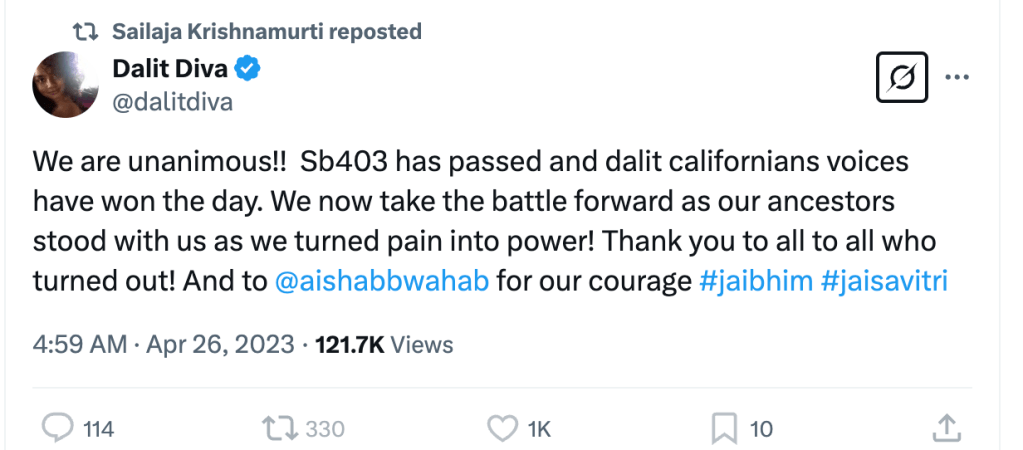
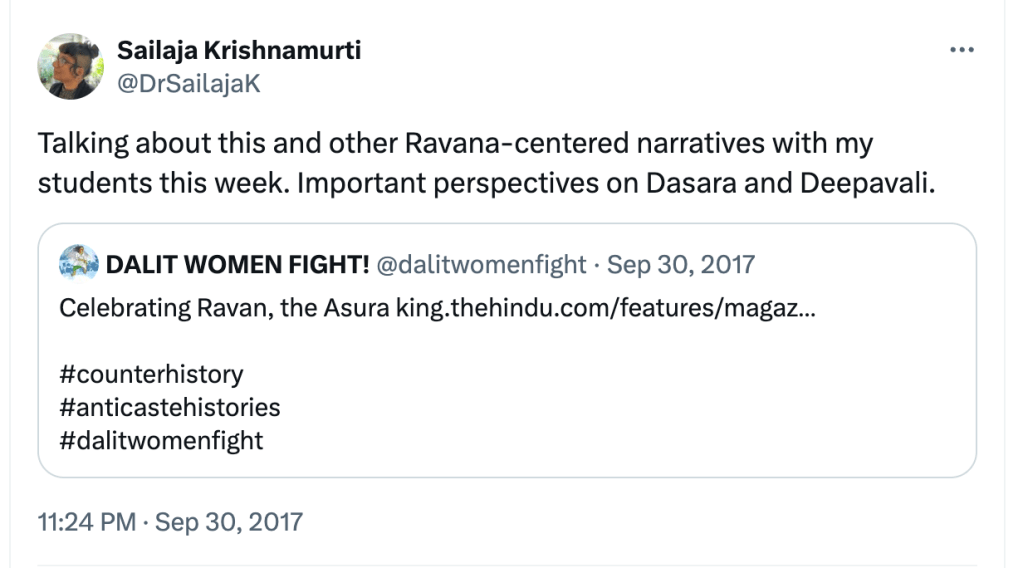
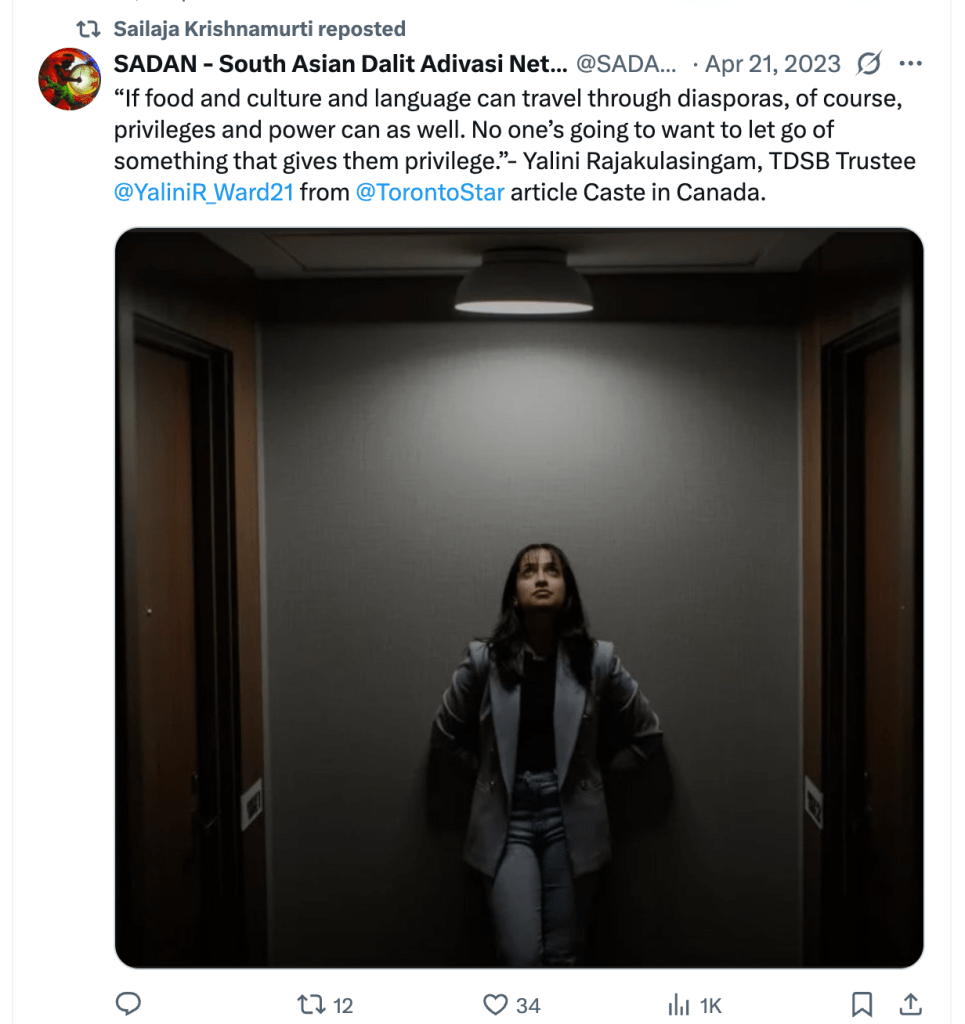
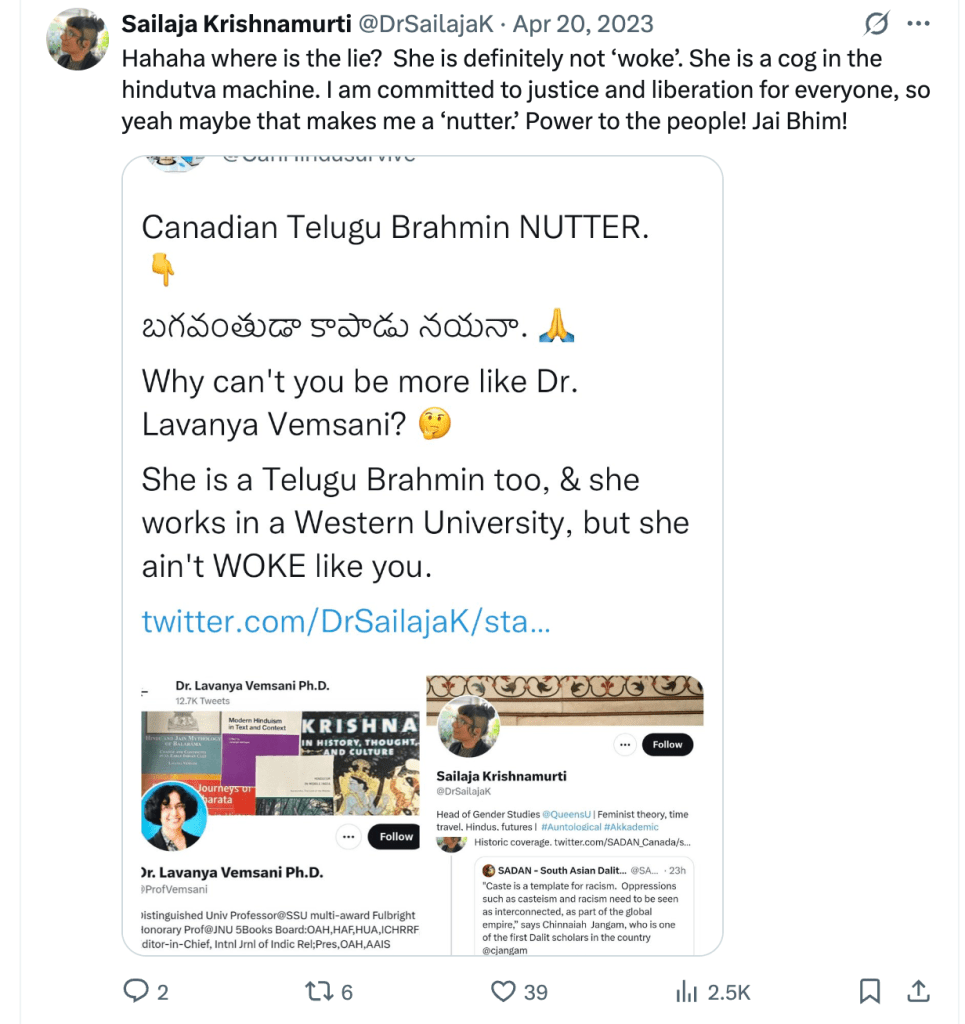
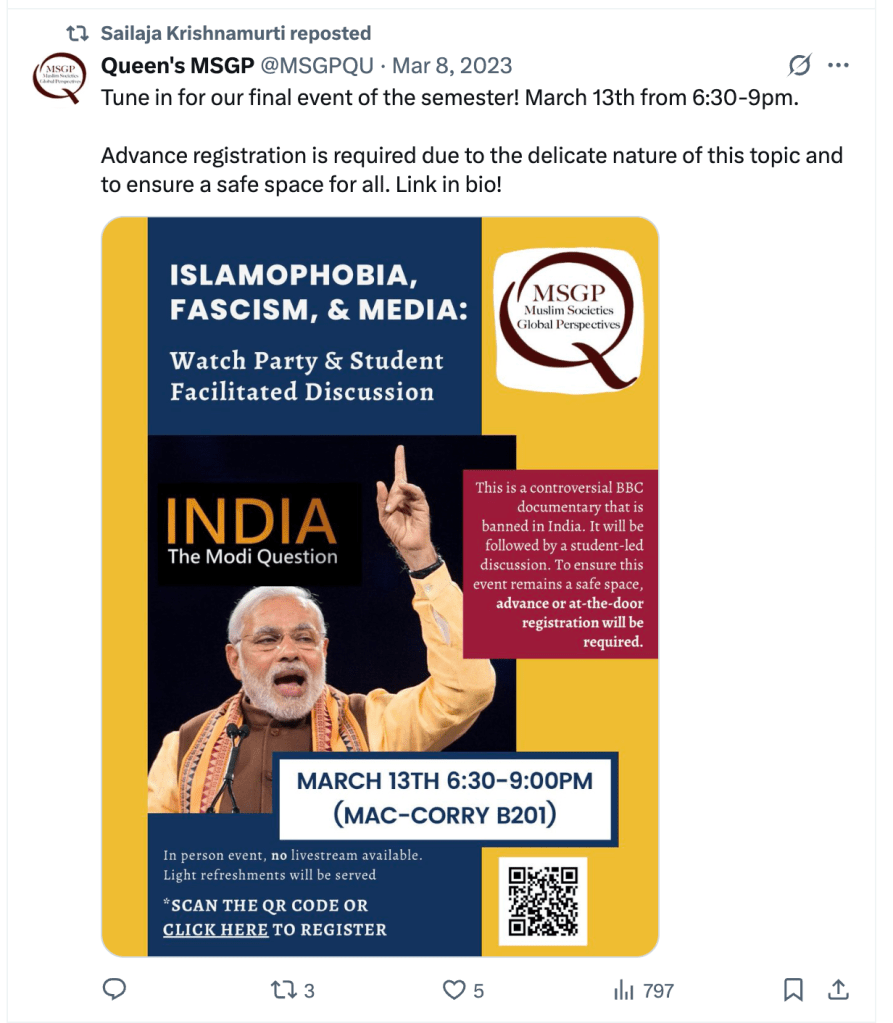
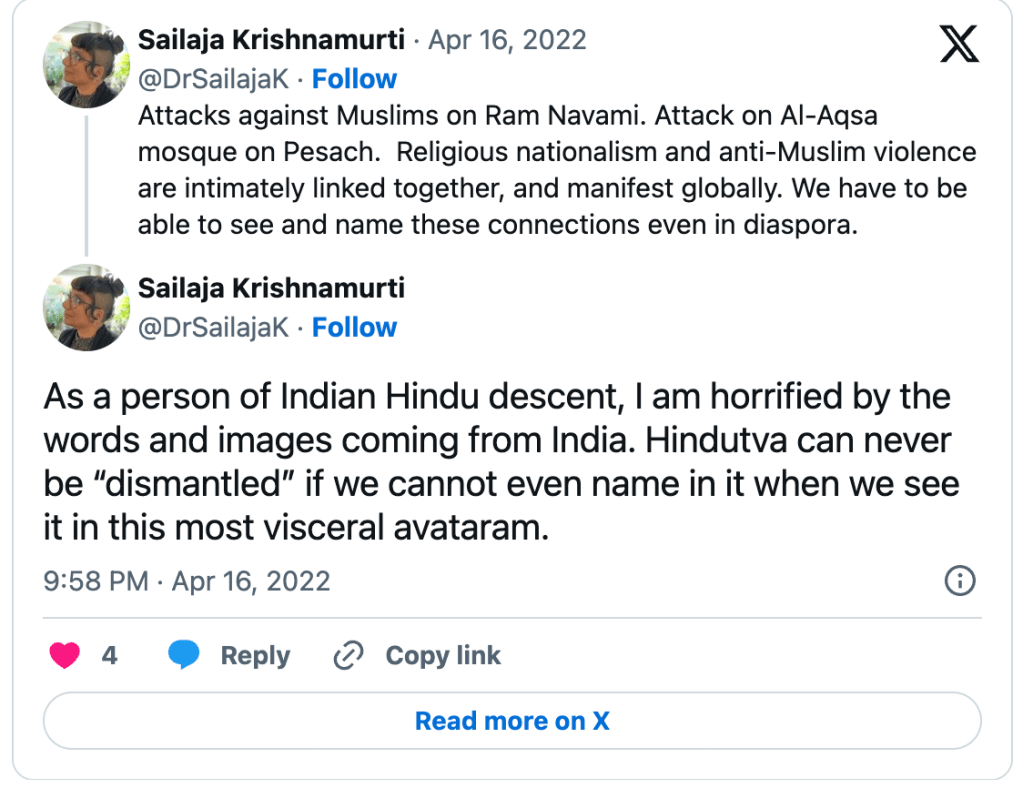
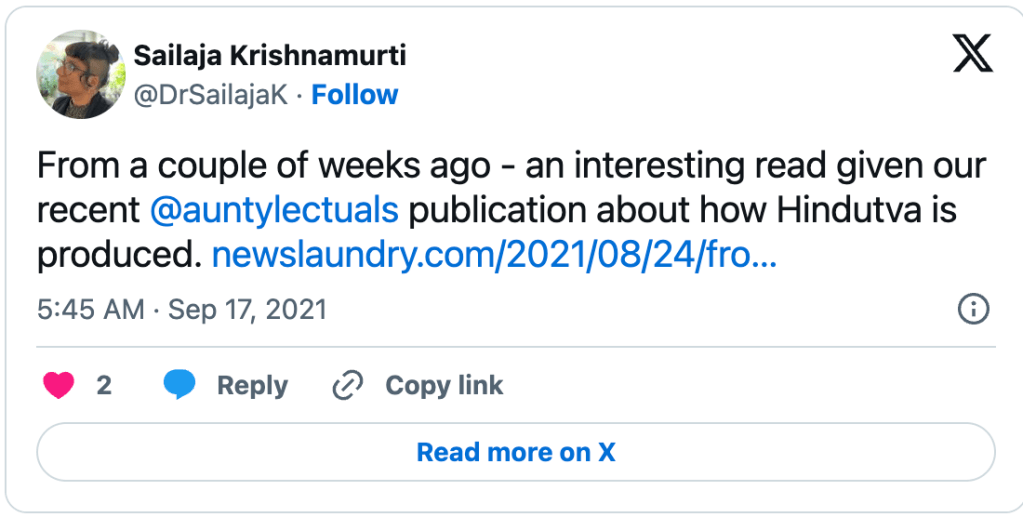
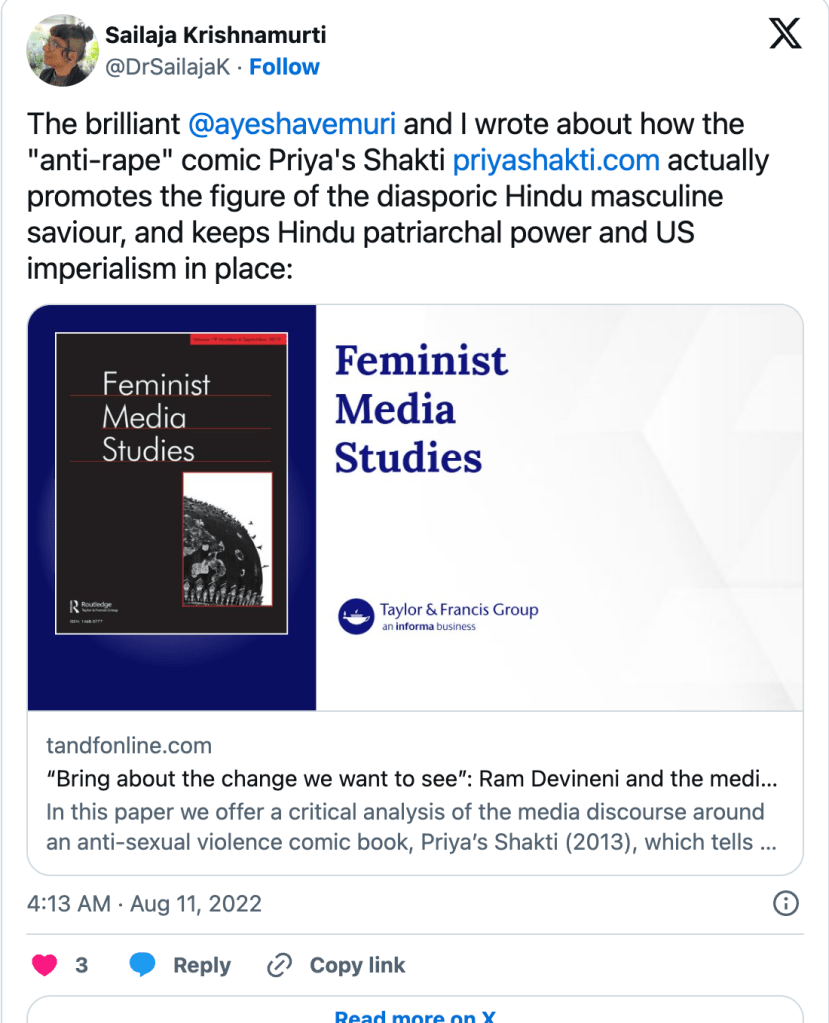
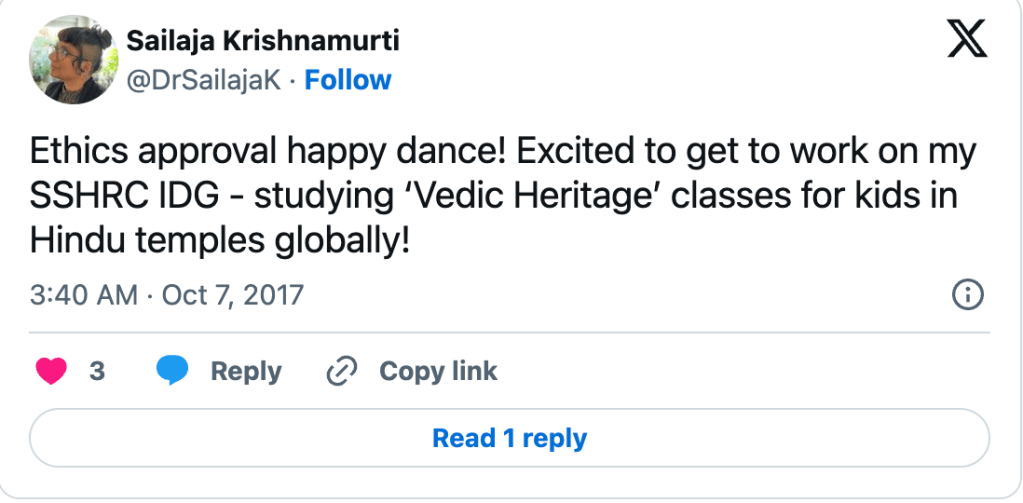
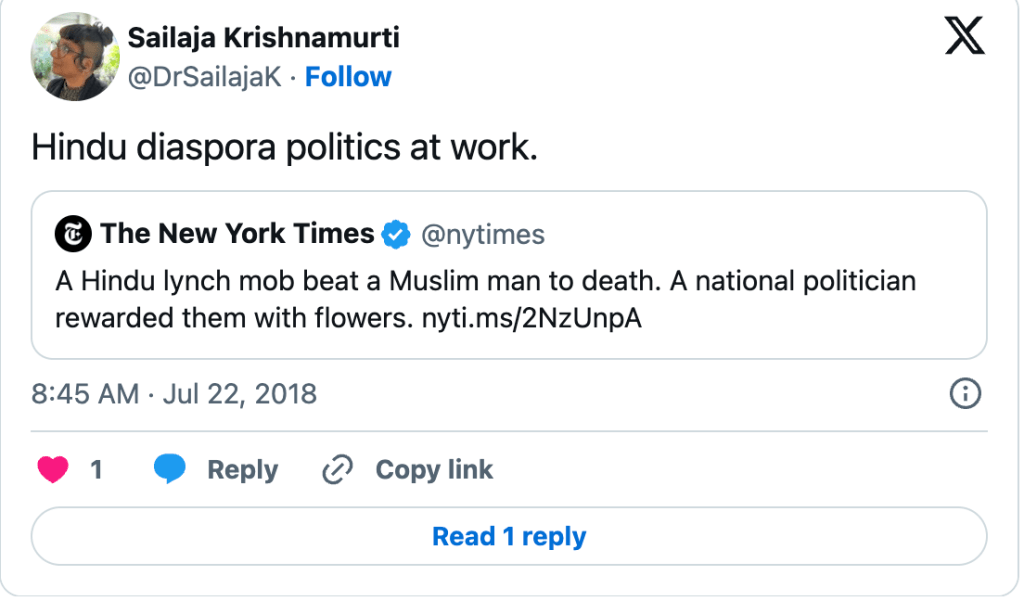
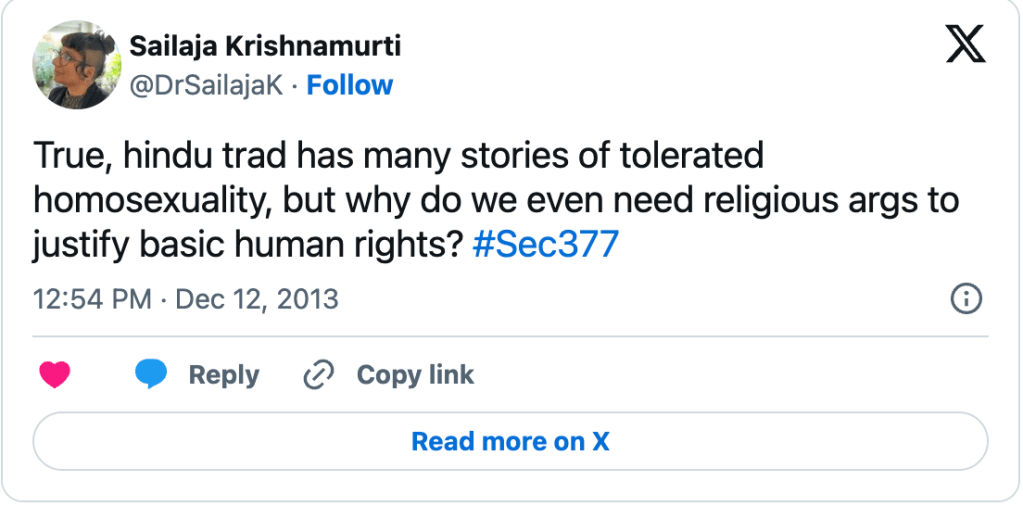
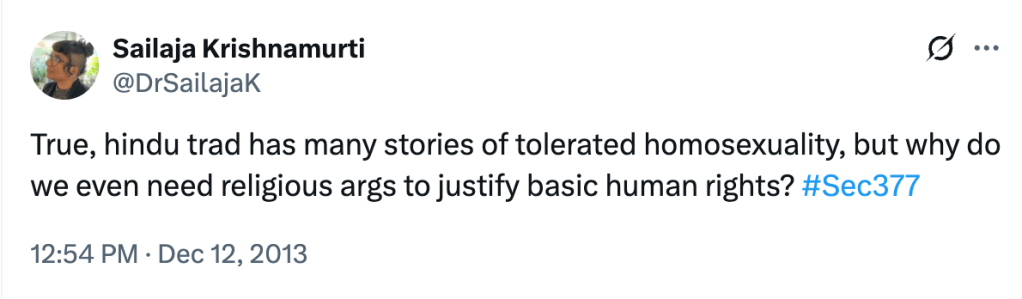
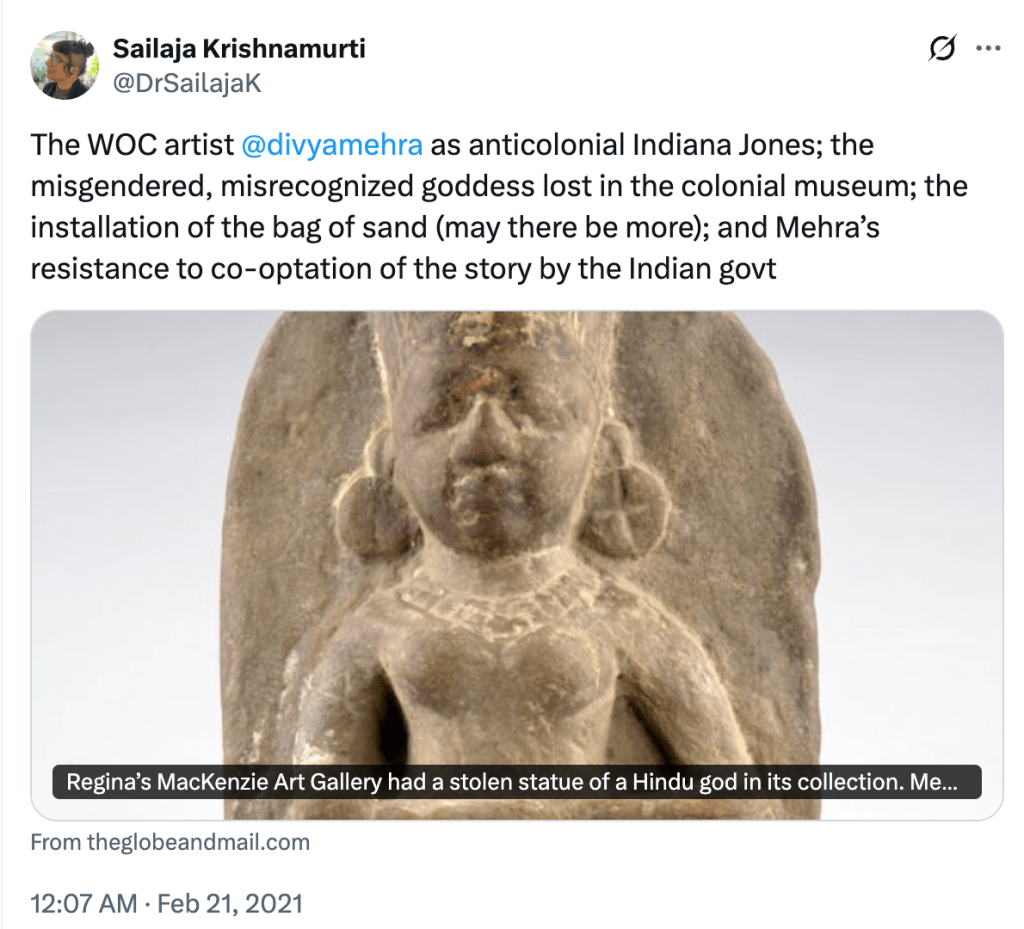
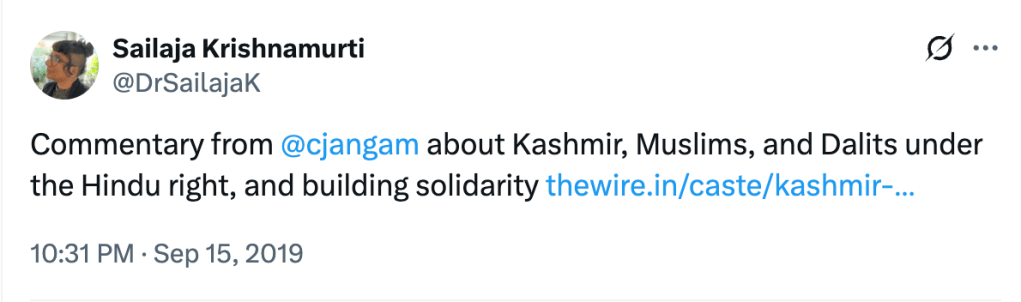
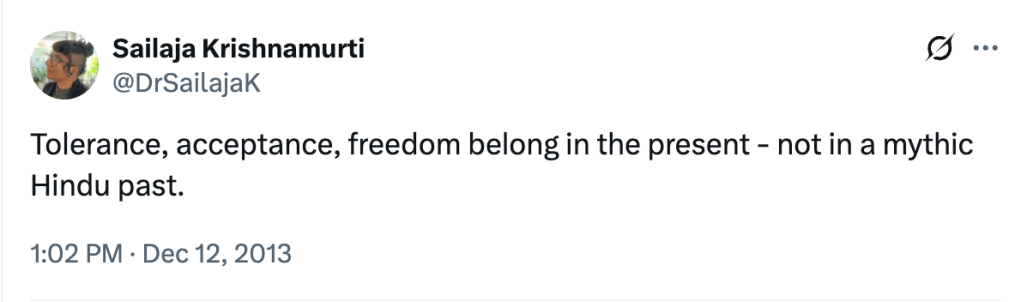
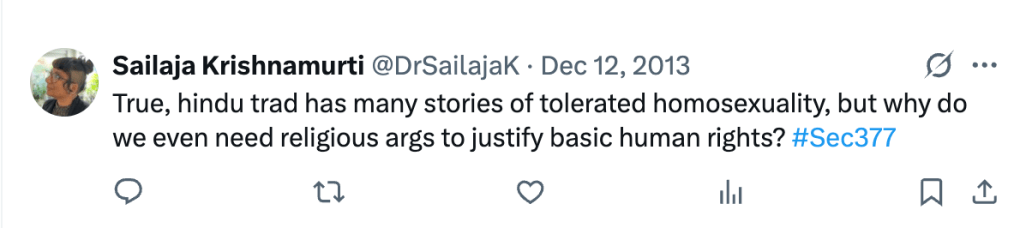
Below are some of Sailaja Krishnamurthi’s posts from X. She has hasn’t tweeted since 2023.



 STOP HINDU HATE ADVOCACY NETWORK