

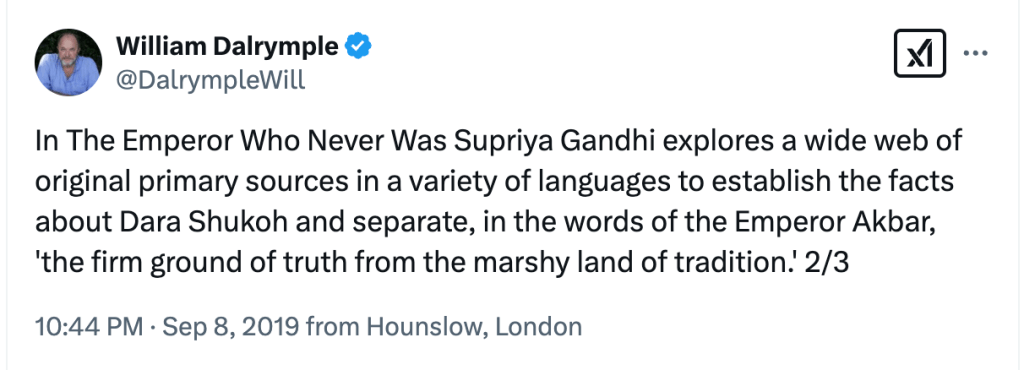
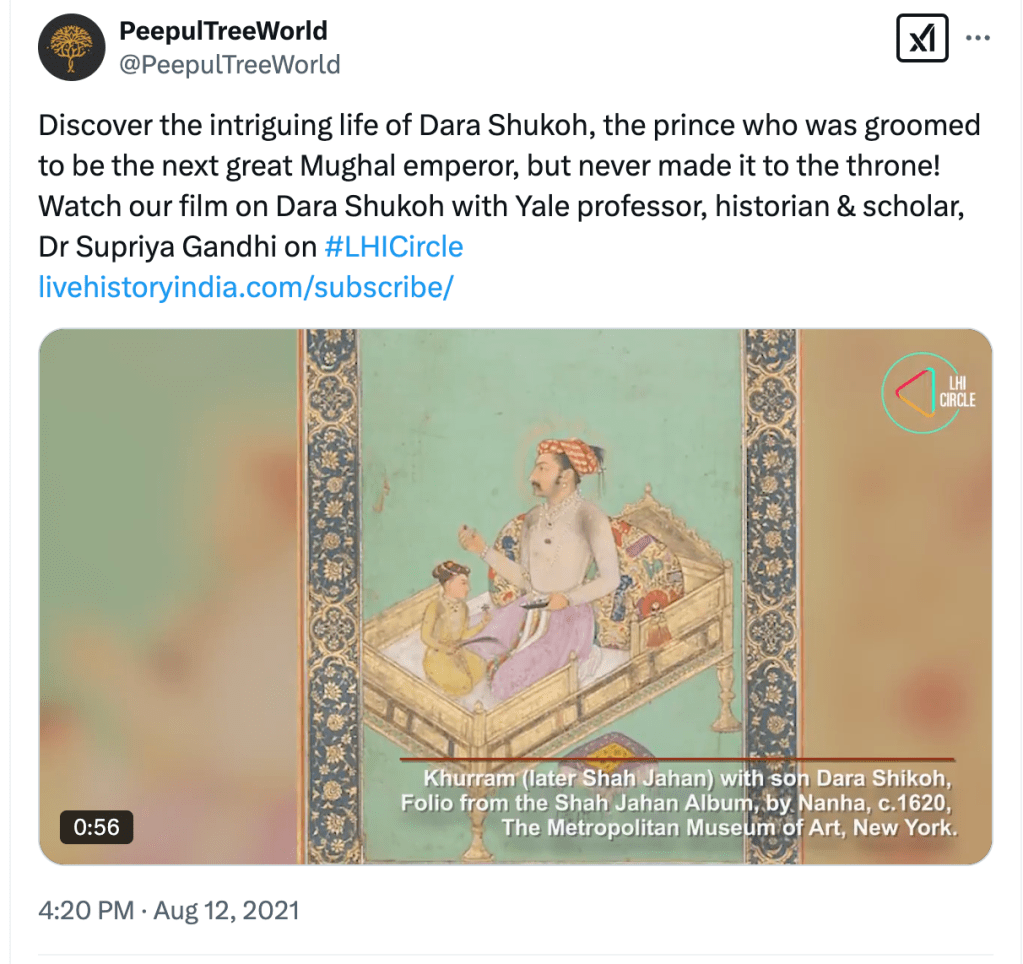
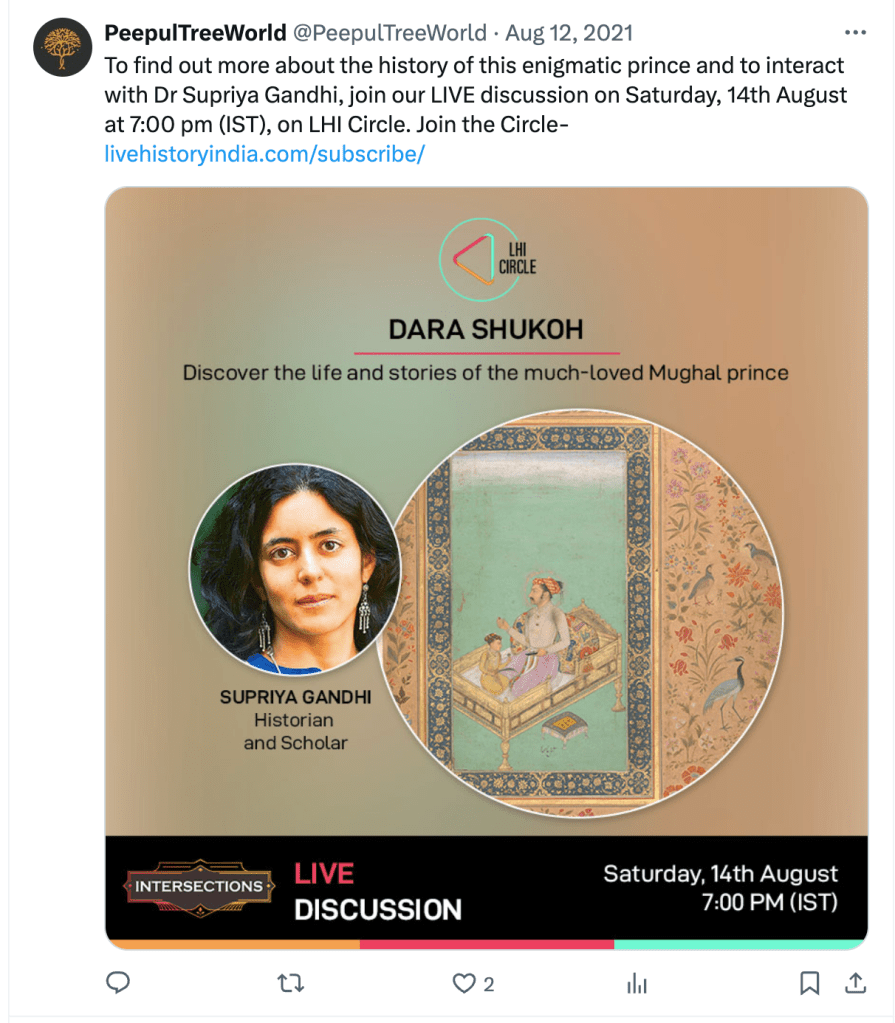
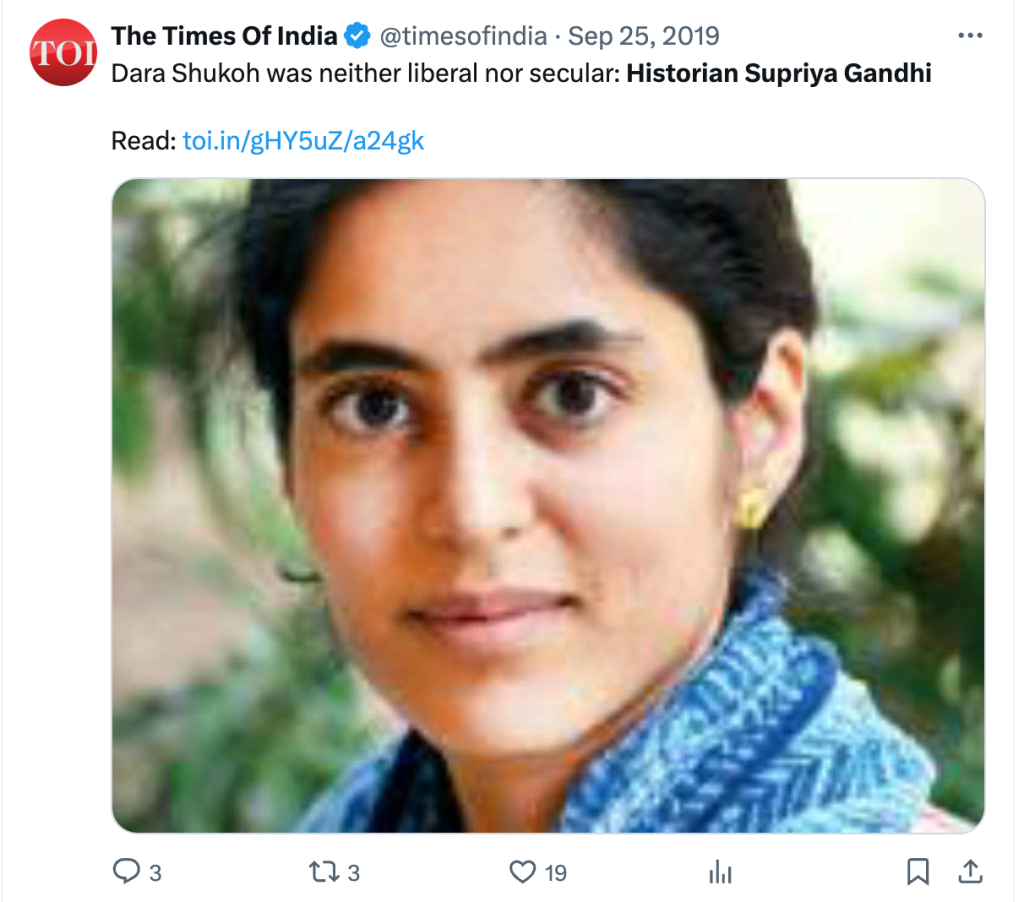
Supriya Gandhi is the great-granddaughter of Mahatma Gandhi, granddaughter of C.Rajagopalachari and daughter of Rajmohan Gandhi. She is an Assistant Professor in the Department of Religious Studies at Yale University. According to the Yale University website, Supriya Gandhi’s work focuses “on the interface of Islam and Indic religions in South Asia” and is the author of the book The Emperor Who Never Was: Dara Shukoh in Mughal India. Her research work at various has been financed by Fullbright and American Council of Learned Societies (ACLS)/ Mellon Foundation. Mellon Foundation is known to be a conduit for CIA funds.
Supriya Gandhi is a member of the South Asia Scholars Activists Collective (SASAC). The SASAC launched The Hindutva Harassment Field Manual which “offers educational and practical resources for the targets, allies, students, and employers of those subjected to Hindu Right assaults.” She is married to Travis Zadeh.
In an interview with Quint, Supriya Gandhi dismissed the Hindu perspective in history, defended the need for a Hindutva Harassment Field Manual and said, it’s “The Hindutva harassment that we are concerned about is very different from the mere airing of various different views. This harassment, which frequently takes the form of violent and misogynistic threats, aims to intimidate scholars and stifle their work.”
In the article published in The Foreign Affairs, “When Toppling Monuments Serves Authoritarian Ends” Supriya Gandhi makes several observations devoid of facts. According to her, the Hindu identity was formed under British rule during the 19th century. She remarks, “Moreover, the very notion of a pan-Indian, primordial Hindu identity crystallized only in the nineteenth century during colonial British rule.” She denies that Hindus did not undergo the “Hindu Holocaust” as documented by Indic as well as Mughal historians. This, she claims, is made by Hindutva or Hindu nationalists who whip up sentiment against Muslims. She writes, “With the rise of the BJP, the notion that Muslims came to India as foreign colonizers, like the British—along with the false claim that they even perpetrated a “Hindu Holocaust”—has gained strength and popularity.” Her second assertion is that Muslim invaders did not oppress Hindus. This assertion is blatantly false as several Muslim historians have recorded the Mughasl jihad against kafirs (Hindus). She says, “But Muslim rulers on the subcontinent didn’t oppress non-Muslims in the manner that such acts might suggest. Mughal royals, for example, lavished support on many temples and Hindu ascetic orders. The Muslim sovereigns who attacked temples for political clout also often paid for others to be built or renovated.” Supriya Gandhi blames Hindu nationalists for holding current Muslims in India responsible for the actions of Mughal kings centuries ago. She writes, “Hindu nationalists exaggerate these instances of iconoclasm and identify contemporary Muslims, who are an economically weak and socially disadvantaged minority, with rulers from the distant past, portraying them as oppressors and deserving of retribution.”
Supriya Gandhi in Building a Civilization State says the Hindu resurgence of a civilisational state “reflects the growing tide of authoritarianism worldwide as well as the internationalization of far-right political movements” and by embracing “the colonial idea of Hinduism as a world religion.” She raises objections against Hindu nationalists trying to infuse the notion of an Indian civilisational state “with a markedly Hindu character” that adopts colonial narratives that cast past “past Muslim rulers as colonial oppressors”. She views it as “Hindu supremacy”. According to Supriya Gandhi, Hindu nationalists “frame Indian Muslims as co-extensive with the historical rulers who are now targets of hatred”. This statement is economical with truth. Muslims in India still take pride in being direct or indirect descendants of Islamic invaders. With the recent outrage amongst Muslims in India over the film Chaava‘s portrayal of Chhatrapati Sambhaji Maharaj of the Maratha Empire, social media was flooded with Muslims in India taking pride in their association with Islamic invaders.
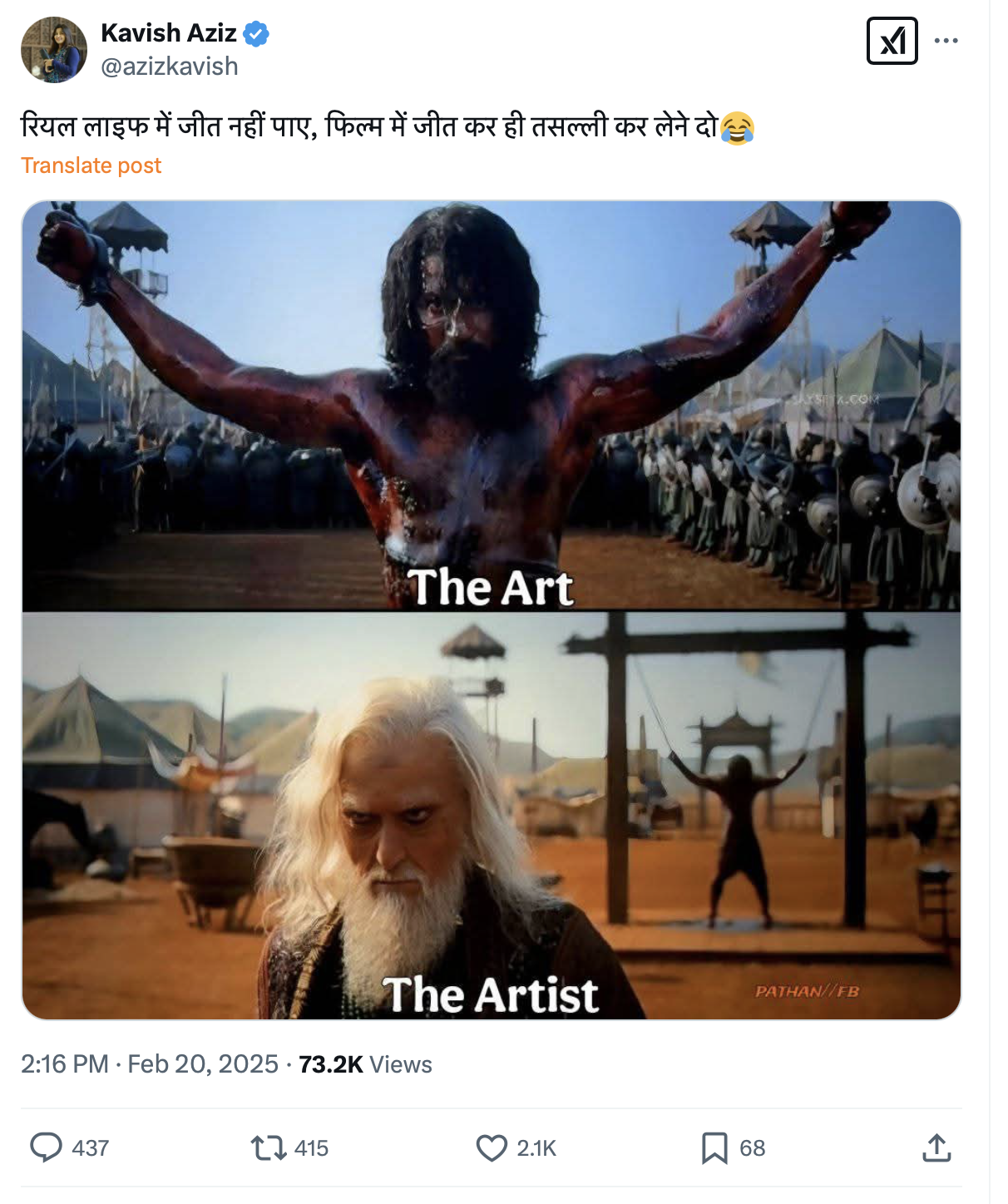




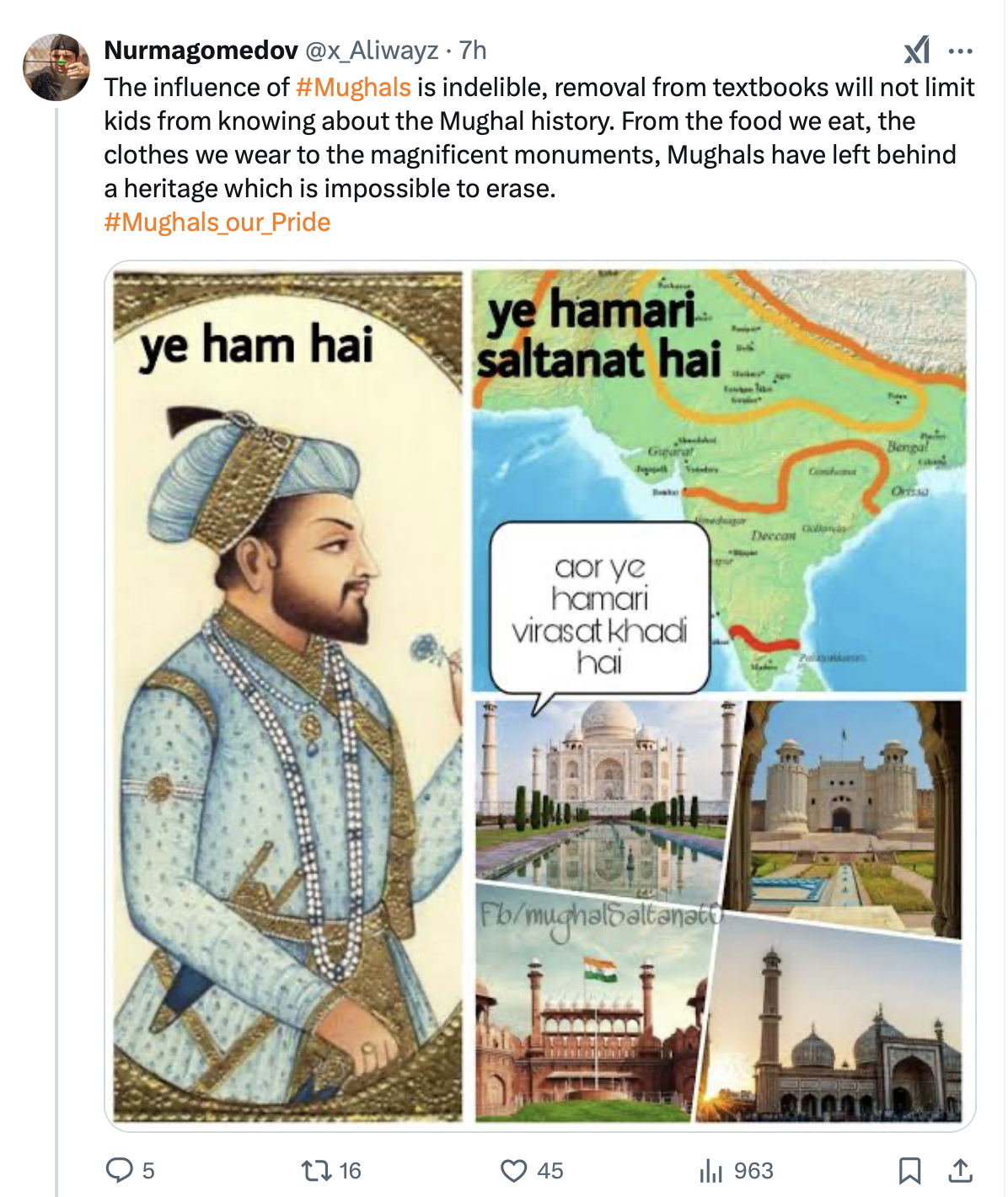


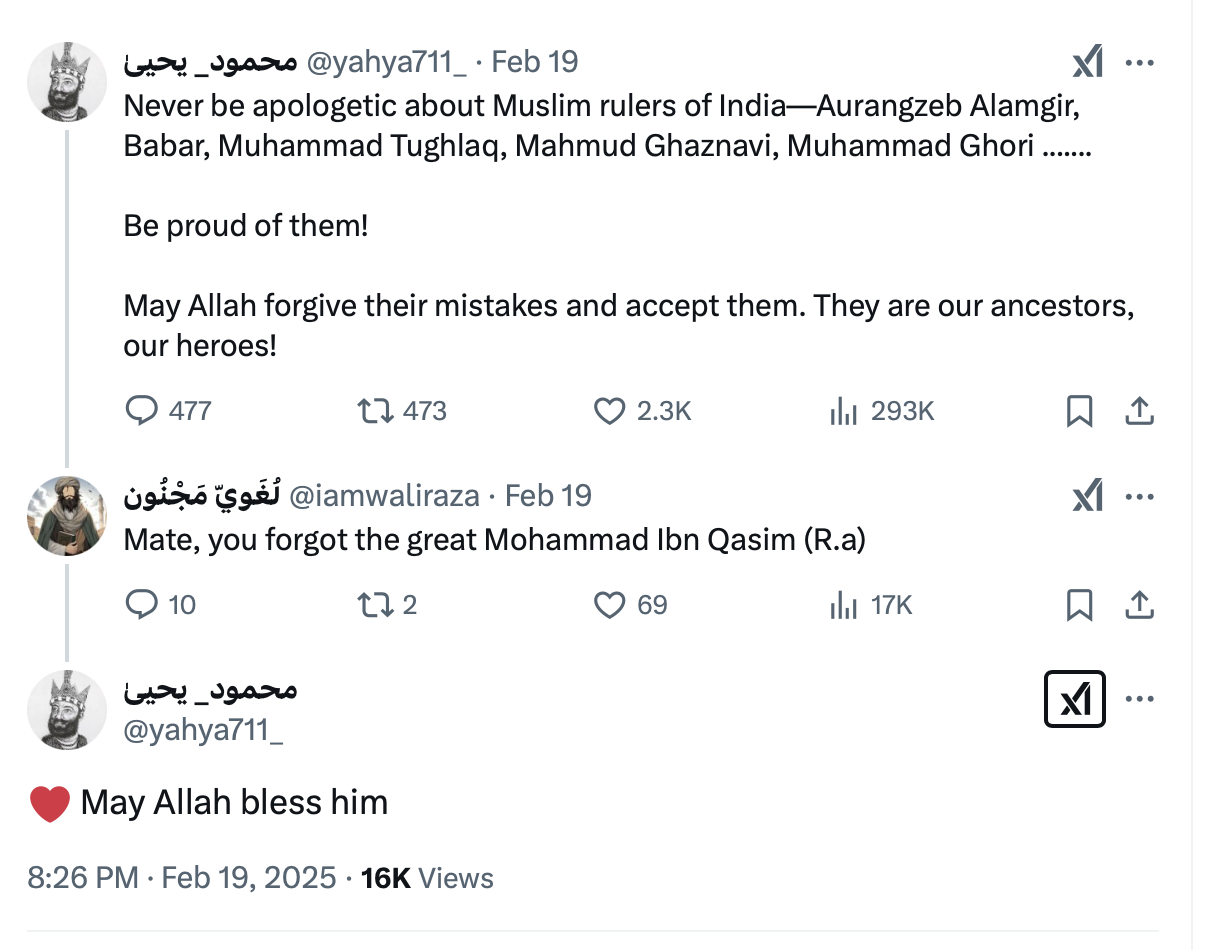

Continuing her tirade against Hindus and the Modi government, Supriya Gandhi writes that civilisational states are built “through force, erasure, rhetoric, grand spectacle, and, in this case, bulldozers together with plenty of concrete and stone.” She goes on to list several infrastructure projects, such as the new Parliament building, the restructuring of Central Delhi, and the restructuring of areas near Varanasi’s Kashi Vishwanath temple, amongst others. She also takes offence at the pamphlet prepared for the G20 summit in Delhi in 2023 which contains several texts and words from ancient Indian scriptures.
In “‘Not a Religion:’ Modern Hinduism and the Emergence of Hindutva“, Supriya Gandhi writes that the description of Hinduism as “a way of life” was the reason for “the historical development of Hindutva ideology” and is problematic as it becomes “the underlying substratum of all religions in South Asia” which “by implication, privileges Hinduism over the “Abrahamic religions,” which are not seen to have the same universalistic breadth.” She further remarks that Hinduism achieved the status of world ‘Religion’ under British rule and fashioned itself “as the anti-religion—one that outshone other religions by virtue of its universality and eternality.” She opines, “The universalizing and secularizing moves by Hindu intellectuals in the nineteenth century helped frame the modern discourse of Hinduism as not a religion but as a way of life.” She concludes by writing, ” Savarkar would have hoped for this—the creation of a majoritarian state-society in which minorities are relentlessly singled out for subjugation and domination.”
Writing for the left-leaning The Immanent Frame, “Hindutva and the shared scripts of the global right“, Supriya Gandhi writes that the “consequence of Hindutva as a national project is the acceleration of environmental degradation.” She says that the Indian government is taking away land from the citizens and “redistributing it to industrialist allies for resource extraction.”
In a panel discussion organised by Karwaan: The Heritage Exploration Initiative on the topic “Revisiting the 18th century in South Asia“, Supriya Gandhi provides a snippet from the book she was working on. She begins her talk about the Persian language and how some Hindus with Sanskrit knowledge translated Sanskrit texts into Persian during Mughal rule. She moves on to the arrival of the British, where she raises objections to the British historians discarding Persian translations of Sanskrit texts in favour of original Sanskrit texts and calls it “new epistemologies.”
Supriya Gandhi takes offence at Hindus taking charge for speaking up for Hindus and Hinduism in her article Who Speaks for Hinduism? published by the Journal of the American Academy of Religion. Speaking of Hindus whom she terms Hindu nationalists, Supriya Gandhi said, “The succeeding years have witnessed the growing dominance of Hindutva as a cultural and political project of right-wing ethno-nationalism, which now looms large over academic inquiry into Hinduism. Today, Hindu nationalists leverage social media, capital, and the long arm of the Indian state to advance their claim of representing the authentic voice of Hinduism.” She goes on to say that Hindus conflate Hindutva with Hinduism. To be noted here, left-leaning academics have equated Hinduism with Hindutva at the Dismantling Global Hindutva Conference. She writes that left-Islamist-Christian-Secular historians have to “resist the Hindutva appropriation of the exclusive right to talk about Hinduism requires interrogating the ways in which the academic study of religion as currently structured in North America and Europe authorizes an insider-outsider binary in reductive terms.”
Supriya Gandhi in Locating Race in Mughal India whitewashes the genocide of Hindus by Islamic invaders by writing, “Hindu supremacist discourses regularly invoke the false claim that the Hindu population of South Asia was enslaved under Mughal rule.” She further remarks, “Hindu nationalist ideologies of race and religion are engulfed in the long shadow of colonialism in South Asia.” In conclusion, she writes, “Today race is at the core of Hindu nationalist visions of India as a so-called civilizational state, where religion too is thoroughly racialized.”
In her article, “Secularism and Hindutva Histories“, Supriya Gandhi extols the virtues of secularism, writes “One of the most powerful historical resources for imagining secularism in modern India has been the era of Mughal rule in the early modern period.” Completely whitewashing the massacre of Hindus at the hands of Islamic invaders in their quest for Jihad against idol worshippers, Supriya Gandhi sings paeans for Mughals, “it is precisely the importance of the Mughal state as a symbol of religious tolerance that makes it such a site of contestation.” She further opines, “The ties that bind Persian and Urdu to Hindu scripturalization offer a means to historicize the transcendental mythologies of Hindu nationalism….The intellectual genealogies of political Hinduism are more deeply entwined with the complex tapestry of Islamic history than the mere decorative appropriation of the Red Fort as a symbol of nationalism would suggest.”
Supriya Gandhi is not on any social media platform.






 STOP HINDU HATE ADVOCACY NETWORK